
Lansiad Camu: Sgwrs Iola a Mari
Birdsplaining: A Natural History, Jasmine Donahaye (New Welsh Rarebye)
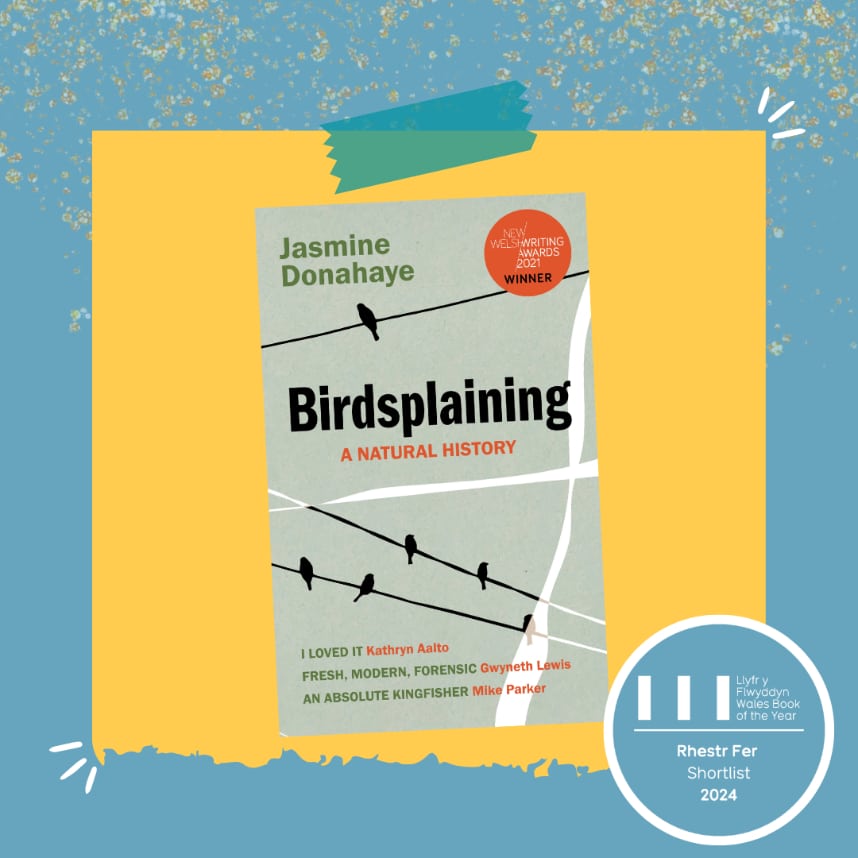
Jasmine Donahaye’s work has appeared in the New York Times and The Guardian, and her documentary, ‘Statue No 1’, was broadcast on BBC Radio 4. Her books include the memoir, Losing Israel (Seren), winner of the nonfiction category in the Wales Book of the Year award; a biography of author Lily Tobias, The Greatest Need (Honno), the basis for ‘O Ystalyfera i Israel’, broadcast by S4C; the cultural study Whose People? Wales, Israel, Palestine (University of Wales Press), and two collections of poetry: Misappropriations (Parthian Books) and Self-Portrait as Ruth (Parthian Books). She is a part-time professor of Creative Writing at Swansea University, and a fellow of the Learned Society of Wales.
Buy Now
Overall Winner – Sarn Helen, Tom Bullough (Granta Publications)
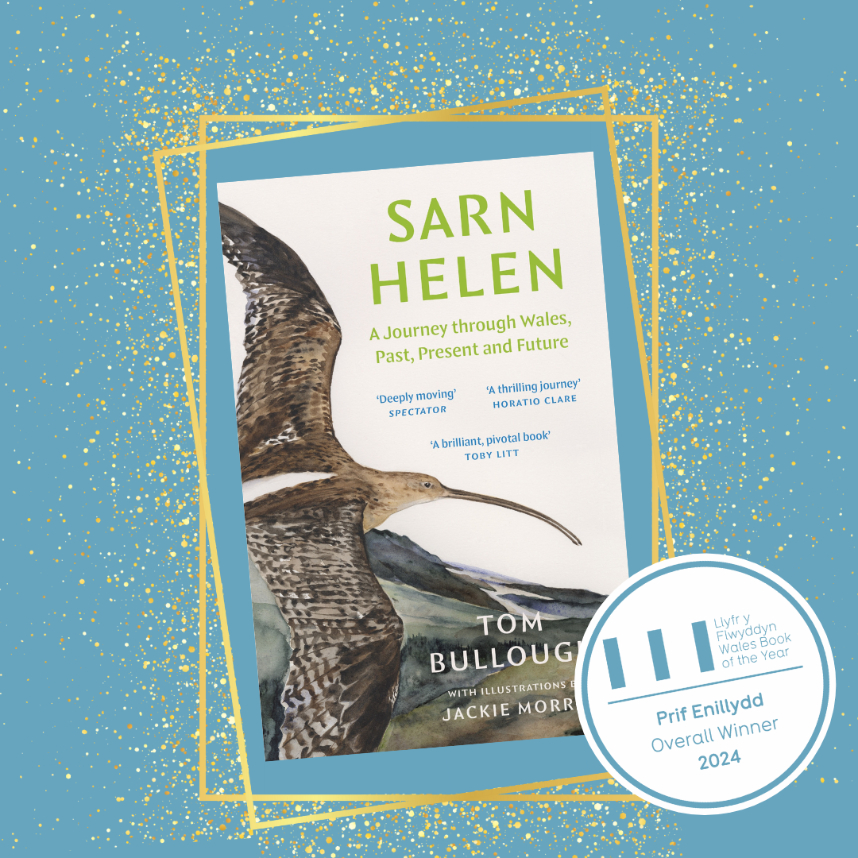
Tom Bullough grew up on a hill farm in Radnorshire, Wales, and lives in Bannau Brycheiniog with his children. He is the author of four novels – A (Sort Of Books), The Claude Glass (Sort Of Books), Konstantin (Penguin Books Ltd), and Addlands (Granta). Sarn Helen is his first work of nonfiction. Tom is a climate activist and a freelance tutor in creative writing, and runs regular courses on climate.
Sarn Helen is illustrated by Jackie Morris.
Spring Rain, Marc Hamer (Harvill Secker)
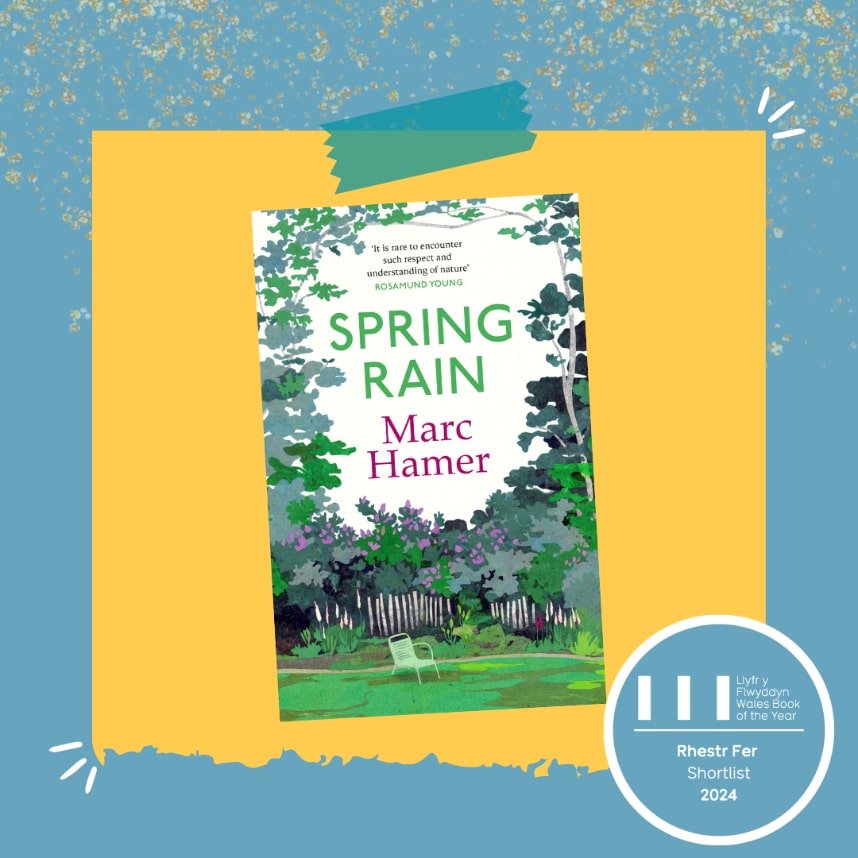
Marc Hamer was born in the North of England and moved to Wales over thirty years ago. After spending a period homeless, then working on the railway, he returned to education and studied fine art in Manchester and Stoke-on-Trent. He has worked in art galleries, marketing, graphic design and taught creative writing in a prison before becoming a gardener. Both his books, A Life in Nature; or How to Catch a Mole (Vintage) and Seed to Dust (Harvill Secker) have been longlisted for the Wainwright Prize.
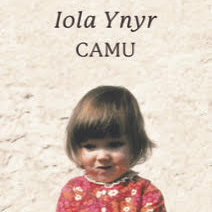
Prif Enillydd – Sut i ddofi Corryn, Mari George (Sebra)
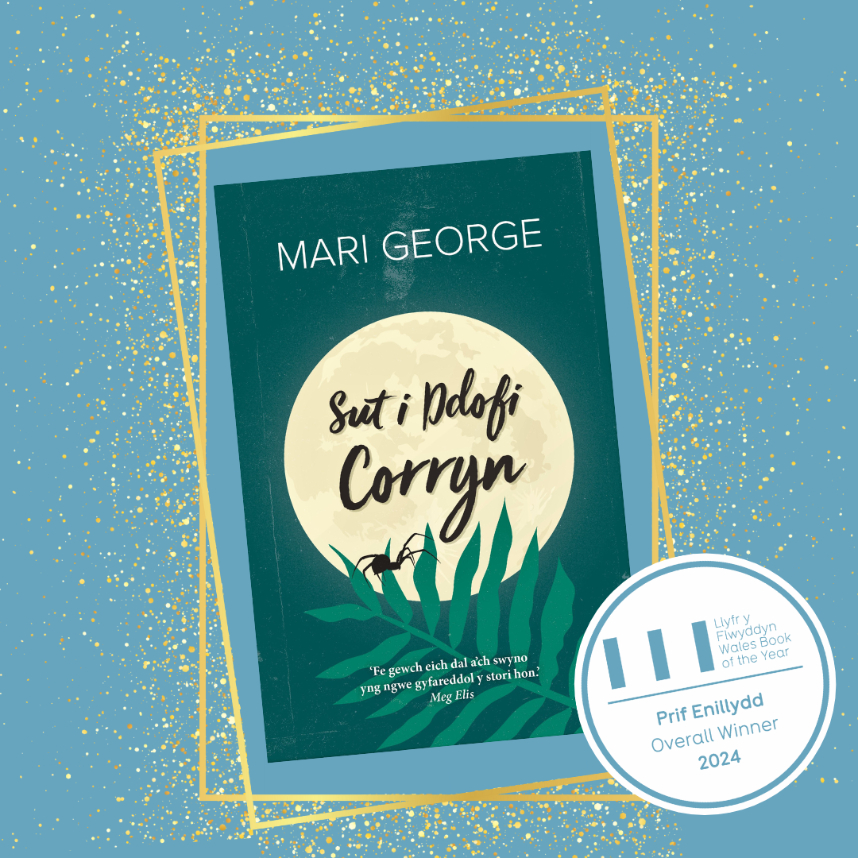
Bardd, awdur a chyfieithydd sy’n byw ym Mhen-y-bont ar Ogwr yw Mari George. Mae hi wedi cyhoeddi dwy gyfrol o gerddi – Y Nos yn Dal yn fy Ngwallt (2004) a Siarad Siafins (2014) – ac mae hi’n aelod o dîm Talwrn Aberhafren. Mae hi hefyd wedi golygu sawl casgliad o farddoniaeth ac wedi ysgrifennu ac addasu nifer o lyfrau i blant. Sut i Ddofi Corryn yw ei nofel gyntaf i oedolion.
Prynwch yma.
Anfadwaith, Llŷr Titus (Y Lolfa)
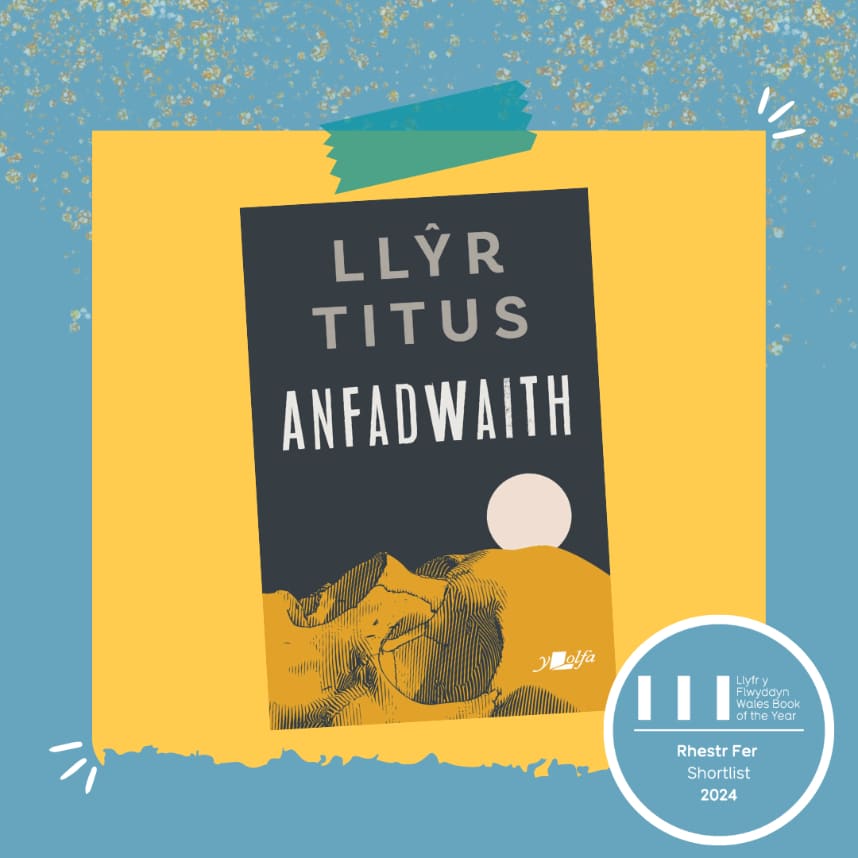
Un o Frynmawr ger Sarn ym Mhen Llŷn ydi Llŷr Titus. Mae’n awdur a dramodydd, yn un o sylfaenwyr Cwmni Theatr Cymunedol y Tebot, cylchgrawn Y Stamp a gwasg Cyhoeddiadau’r Stamp. Enillodd Goron Eisteddfod Genedlaethol yr Urdd yn 2011, a’r Fedal Ddrama y flwyddyn olynol. Enillodd ei gyfrol gyntaf, nofel ffuglen wyddonol ar gyfer pobl ifainc, Gwalia (Gomer@Atebol), Wobr Tir na n-Og yn 2016. Enillodd ei nofel, Pridd (Gwasg y Bwthyn) Brif Wobr Llyfr y Flwyddyn yn 2023.
Raffl – Aled Jones Williams (Gwasg Carreg Gwalch)
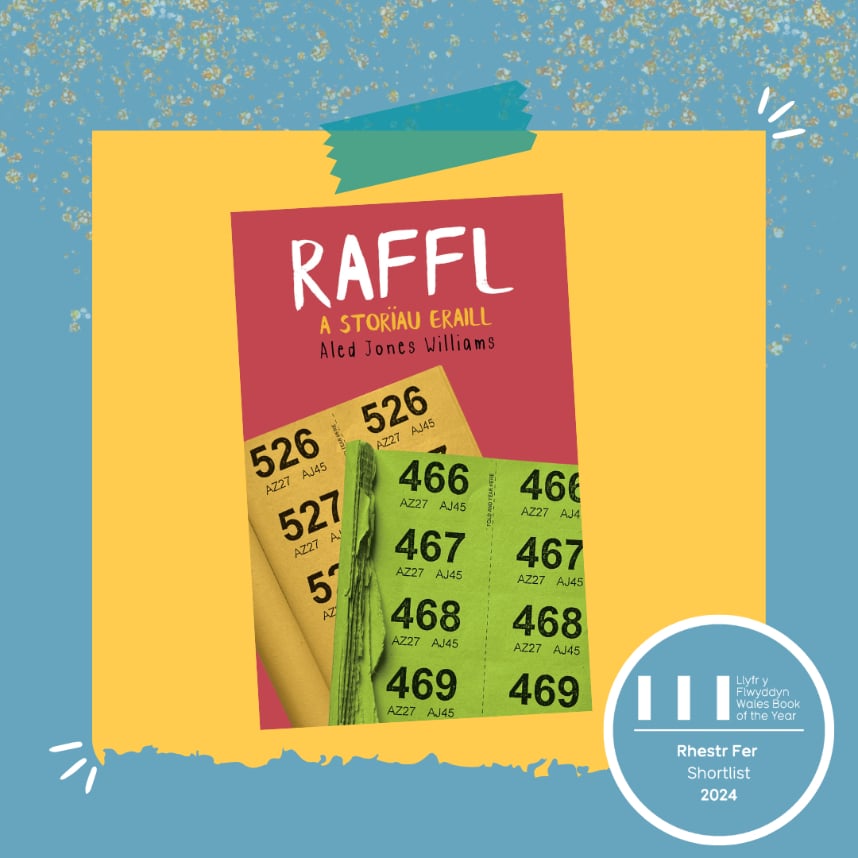
Magwyd Aled Jones Williams ger Caernarfon ac astudiodd ym Mhrifysgol Bangor, Coleg Diwinyddol Mihangel Sant yn Llandaf, a Phrifysgol Caerdydd. Mae’n offeiriad gyda’r Eglwys yng Nghymru, yn Brifardd, yn awdur ac yn ddramodydd y mae amryw o’i ddramâu wedi eu llwyfannu. Roedd ei lyfr, Rhaid i ti fyned y daith honno dy hun (Gwasg Pantycelyn), ar restr fer Llyfr y Flwyddyn yn 2002, ac enillodd y Goron yn yr Eisteddfod Genedlaethol yr un flwyddyn. Mae ei bryddest fuddugol, ‘Awelon’, wedi ei chynnwys yn Y Cylchoedd Perffaith (Gwasg y Bwthyn), ei gasgliad cyntaf o farddoniaeth, sy’n ymdrin â cholli ffydd ac alcoholiaeth. Dewiswyd ei nofel Eneidiau (Gwasg Carreg Gwalch) ar gyfer Silff Lyfrau Cyfnewidfa Lên Cymru yn Hydref 2013, ac roedd ar restr fer Llyfr y Flwyddyn yn 2014. Dewiswyd ei nofel, Nostos (Gwasg Carreg Gwalch), hefyd i Silff Lyfrau 2018.
Gypsy Stories Showcasing Event
WHAT’S ON: Gypsy Stories
When: 27th June 2024, 4pm
Where: The Riverfront Theatre, Kingsway, Newport, NP20 1HG
The Joy Bringers by Karin Celestine

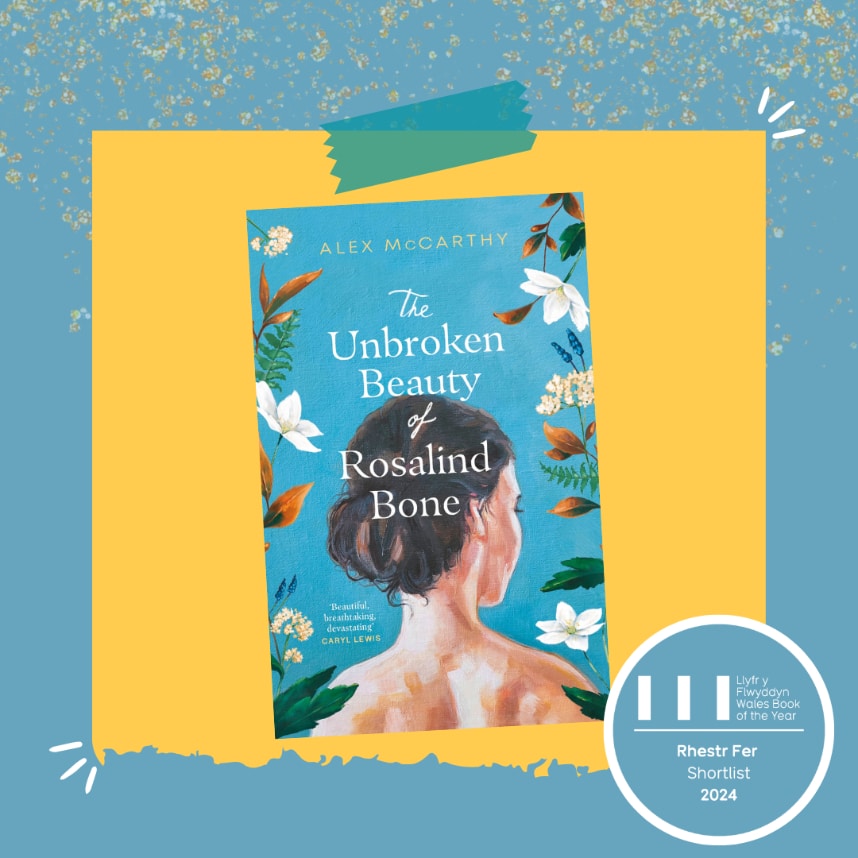
Fiction – The Unbroken Beauty of Rosalind Bone – Alex McCarthy (Doubleday)
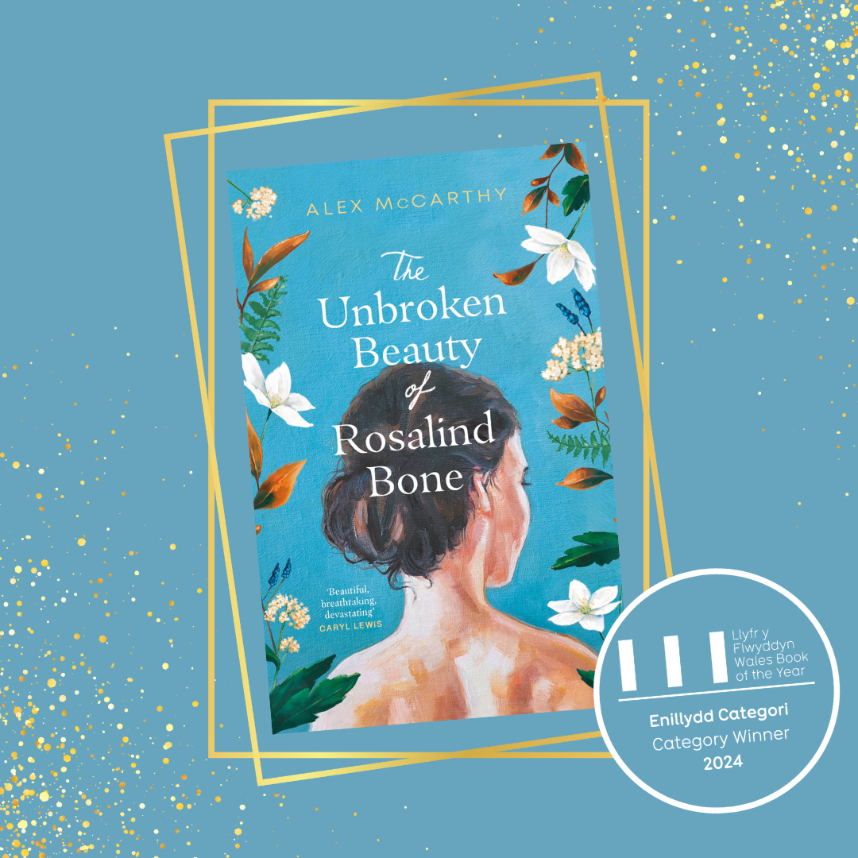
Alex McCarthy was born in Cardiff and grew up in South Wales. An alumna of London Contemporary Dance School, she worked as a dancer and choreographer for a number of years on stage, TV and film. In 2017, following a career change and several years of writing, Alex began to write this novel. She has a daughter and stepdaughter, and lives in Wales.
Stray Dogs, Richard John Parfitt (Third Man Books)
Born, educated, and living in south Wales, Richard John Parfitt was a founding member of 90s Welsh rock group 60ft Dolls. As a writer he was shortlisted for the New Welsh Review Rheidol Prize and has also had work published by Planet: The Welsh Internationalist, The Conversation, The Portland Review, Bloomsbury Academic, and Red Pepper Magazine. He holds a BA [Hons] in English and an MA in Education.
Neon Roses, Rachel Dawson (John Murray)
Rachel Dawson is a lesbian, working-class Welsh writer. Neon Roses is her debut novel. She was awarded a bursary by Literature Wales in 2020, which enabled her to write it. She was born in Swansea and has done a variety of jobs, including selling sausage rolls and vibrators (not at the same time), and volunteering for an MP. She now works in the third sector and lives with her wife in Cardiff.
Pennod 42 – Bromance William Salesbury a Gruffudd Hiraethog
The Bromance of William Salesbury and Gruffudd Hiraethog
In the last episode it was seen that the humanist William Salesbury pays tribute to the bard Gruffudd Hiraethog in his introduction to the book Oll Synnwyr Pen Cymro. We look at the other side of the coin in this episode, and we do that by reading a praise poem which Gruffudd Hiraethog composed for the humanist.
Although we sometimes see the professional Welsh poets and the humanists as two factions competing over the future of the Welsh language and its literature, the friendly and productive relationship between these two offers a very different view. We see the bard adapting the old Welsh panegyric conventions in order to praise the education which the humanist got in Oxford, providing an excellent example of the way in which the old and the new combines in Welsh literature of the sixteenth century.
Y Delyn Aur, Malachy Owain Edwards (Gwasg y Bwthyn)
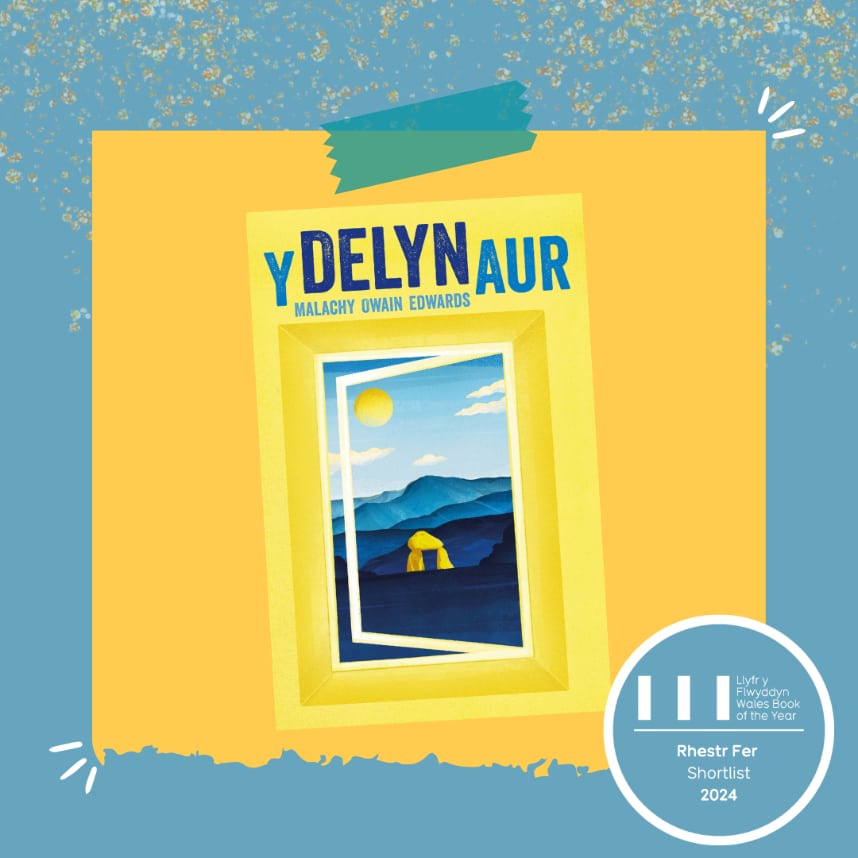
Yn enedigol o Lundain ac wedi ei fagu yn Ffynnon Taf mae Malachy bellach yn byw ar Ynys Môn. Cafodd cofiant ffeithiol creadigol yr awdur, Y Delyn Aur ei gyhoeddi gan Wasg y Bwthyn ym mis Tachwedd 2023. Ynddo mae Malachy yn wynebu ei hunaniaeth hil-gymysg, aml-ddiwylliedig a chrefyddol wrth olrhain hanes ei deulu yn Iwerddon a Barbados. Ar hyn o bryd, mae’n ymchwilio i’r dilyniant yn ei gyfres gofiannol ffeithiol creadigol, Paradwys Goll a gyhoeddir yn 2025. Yn ogystal ag ysgrifennu llyfrau, mae’r awdur yn golofnydd i’r cylchgrawn Golwg.
Barn y Bobl – Trothwy, Iwan Rhys (Y Lolfa)

Magwyd Iwan Rhys ym Mhorthyrhyd, Cwm Gwendraeth. Enillodd Gadair Eisteddfod yr Urdd ddwywaith; yn 2001 ac yn 2008. Mae’n aelod o dîm talwrn Dros yr Aber a thîm Y Deheubarth yn Ymryson yr Eisteddfod Genedlaethol. Ef yw awdur y gyfrol Eleni Mewn Englynion (Gwasg Carreg Gwalch) a’r nofel Y Bwrdd (Y Lolfa).
Ffeithiol Greadigol – Cranogwen, Jane Aaron (Gwasg Prifysgol Cymru)
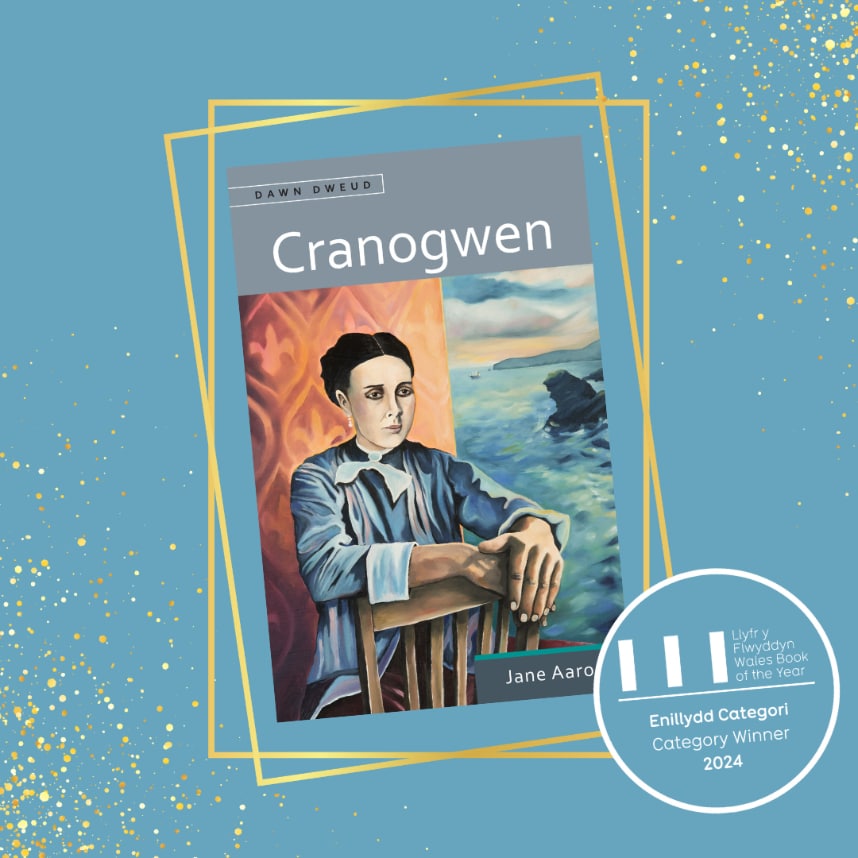
Athro Emerita yn y Dyniaethau ym Mhrifysgol De Cymru yw Jane Aaron; enillodd ddwy wobr am ei chyfrolau blaenorol ar lên menywod Cymru yn y bedwaredd ganrif ar bymtheg, sef Gwobr Goffa Ellis Griffith (1999) a Gwobr Roland Mathias (2009), ac mae hefyd wedi cyhoeddi sawl erthygl ar y pwnc.
Astronot yn yr Atig gan Megan Angharad Hunter
Jac a’r Angel gan Daf James
Anturiaethau’r Brenin Arthur gan Rebecca Thomas
Mae Bywyd Yma – Guto Dafydd (Gwasg Carreg Gwalch)
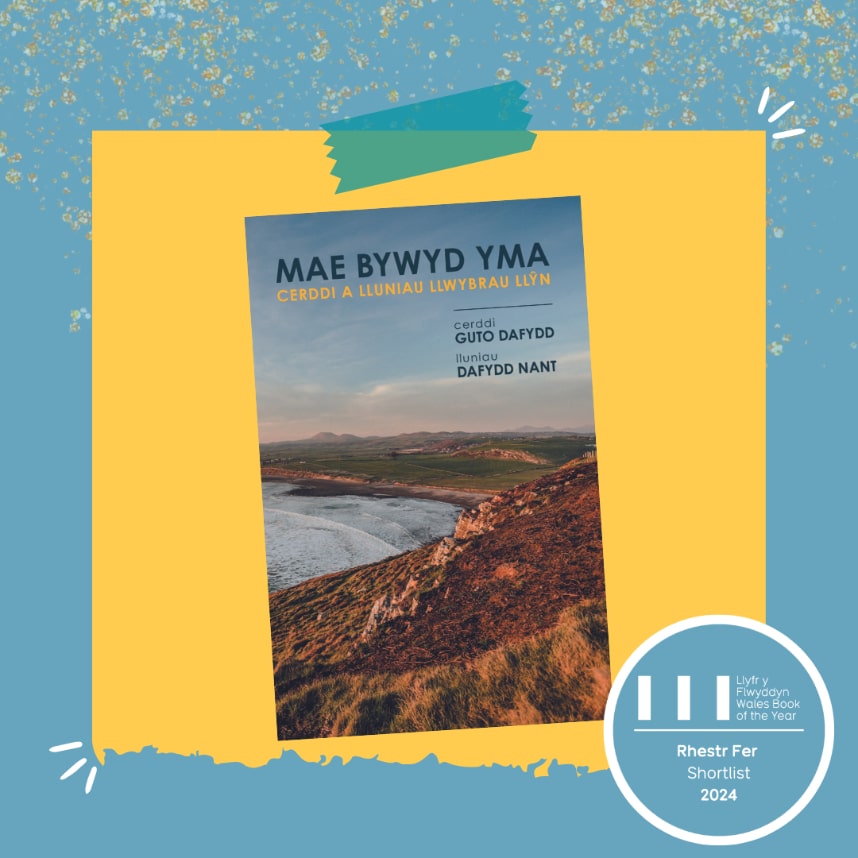
Mae Guto Dafydd yn fardd ac yn nofelydd. Yn wreiddiol o Drefor, mae bellach yn magu Casi a Nedw ym Mhwllheli gyda Lisa. Enillodd y Goron yn Eisteddfodau Cenedlaethol 2014 a 2019, a chyhoeddi Ni Bia’r Awyr (Cyhoeddiadau Barddas), cyfrol o gerddi, yn 2014. Mae ei farddoniaeth yn sôn am berthynas pobl, eu hunaniaeth a’u straeon, a’r tir. Ar ôl cyhoeddi’r nofel Stad yn 2015, enillodd Wobr Goffa Daniel Owen am Ymbelydredd yn 2016 a Carafanio yn 2019. Mae ei nofelau (oll wedi eu cyhoeddi gan Y Lolfa) yn sôn am Gymry yn Lloegr, a chreaduriaid sy’n cael trafferth dygymod â’u hamgylchiadau yn y byd.
Mae Mae Bywyd Yma yn gywaith barddoniaeth a ffotograffiaeth. Lluniau gan Dafydd Nant.
Barddoniaeth – Mymryn Rhyddid, Gruffudd Owen (Cyhoeddiadau Barddas)
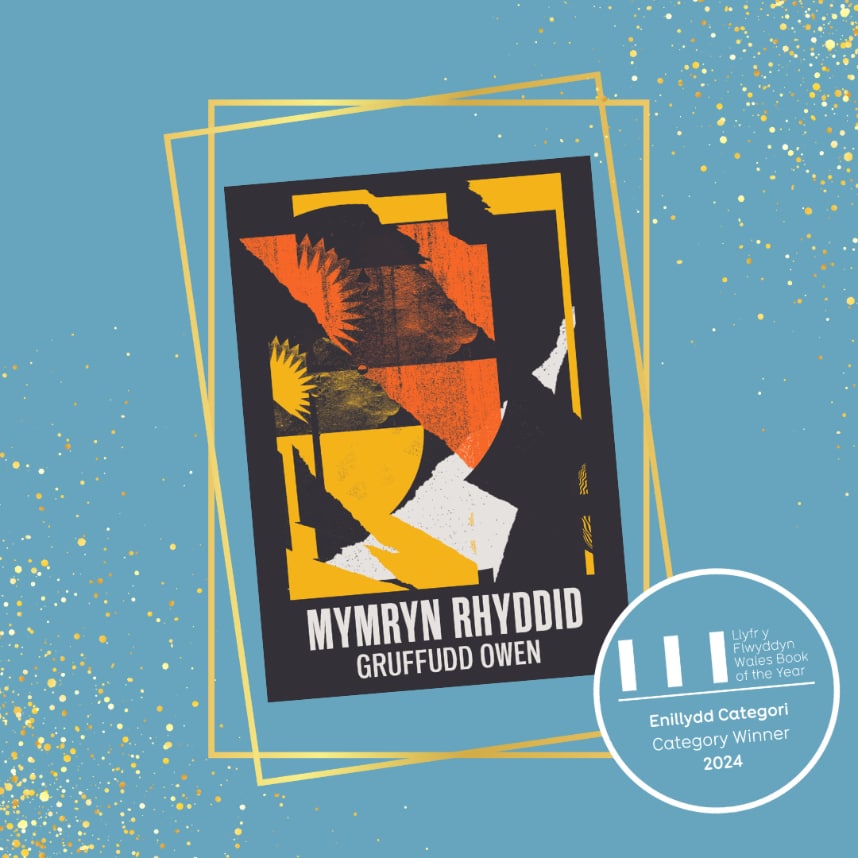
Mae Gruffudd Owen yn fardd, dramodydd a sgriptiwr teledu o Bwllheli. Enillodd Gadair yr Eisteddfod Genedlaethol yn 2018 ac ef oedd Bardd Plant Cymru 2019-2021. Mymryn Rhyddid yw ei ail gyfrol o gerddi ar gyfer oedolion. Mae’n byw yng Nghaerdydd gyda’i wraig a’i feibion.
Y Traeth o Dan y Stryd – Hywel Griffiths (Cyhoeddiadau Barddas)
Mae Hywel Griffiths yn fardd ac yn ddaearyddwr yn Adran Daearyddiaeth a Gwyddorau Daear, Prifysgol Aberystwyth. Enillodd Goron Eisteddfod Genedlaethol yn 2008 a’r Gadair yn 2015. Mae’n cyfrannu at y Talwrn fel aelod o dîm y Glêr ac yn ymrysona gyda thîm yr Ymryson. Afonydd a llifogydd yw ei arbenigedd fel daearyddwr ac mae hynny’n ysbrydoliaeth i’w waith creadigol yn aml. Mae’n byw yn Llanbadarn Fawr gyda’i wraig, Alaw, a’i blant, Lleucu a Morgan. Y Traeth o Dan y Stryd yw ei bedwaredd gyfrol o farddoniaeth.
Pennod 41 – Maniffesto William Salesbury
We discuss an incredibly exciting text in this episode, namely William Salesbury’s introduction to a book published in 1547, Oll Synnwyr Pen. We suggest that this introduction can be seen as a Welsh humanist manifesto, a call which presents an agenda for safeguarding and perfecting the language.
William Salesbury used his Oxford education and his skill as an author to wake up readers and make them aware of the need: they had to ensure that Welsh would be a language of learning, a language which could discuss any aspect of society and thought, a medium capable of transmitting any kind of knowledge.
Mapping Public Interest Journalism in Wales
Mapio Newyddiaduraeth er Budd y Cyhoedd yng Nghymru
gan Silvia Rose
Where the River Takes Us – Lesley Parr
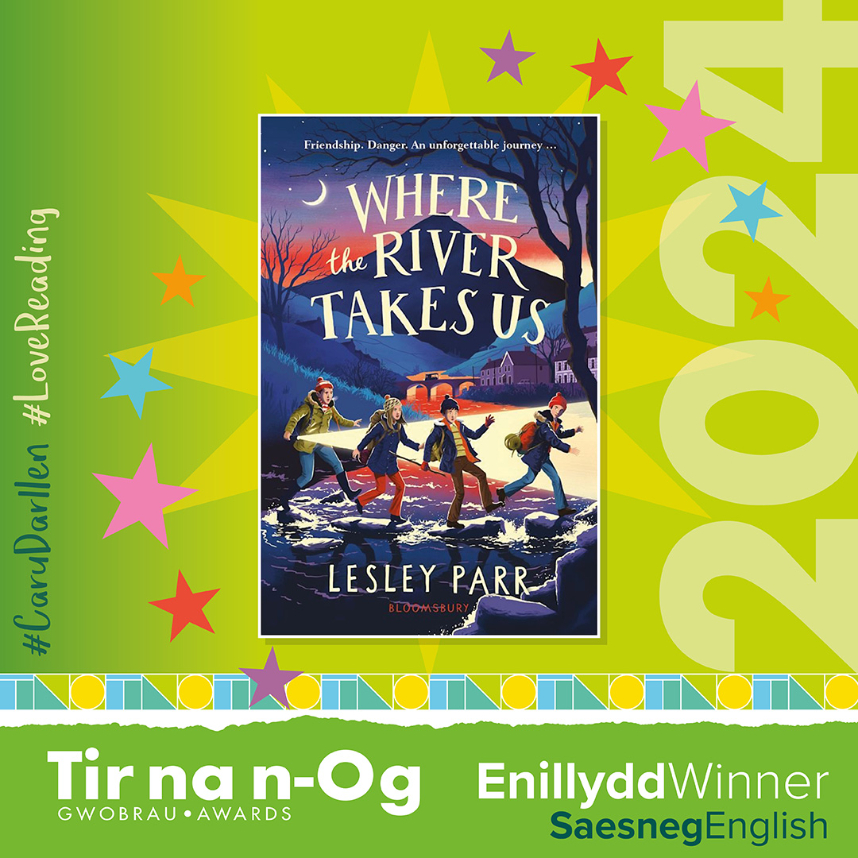
Where the River Takes Us by Lesley Parr is the 2024 winner of the Tir na n-Og English-language Award for children and young people’s literature.
The book also won the Reader’s Choice Award, a special award chosen by children and young people who took part in the Tir na n-Og Shadowing Scheme and nominated their own winner from the shortlisted titles.
Where the River Takes Us, is a pacy 1970s adventure set in the South Wales valleys.
Whispers echo through the valley – tales of a wild beast roaming the mountains. When a reward is offered for proof of its existence, Jason and his friends are determined to find the creature first. But for Jason it’s more than a quest – the money is a way for him and his brother to stay together. The four friends set off, following the river north, not realising that this journey will push them to their limits. An extraordinary adventure awaits …
“Action-packed and brilliantly written, this pacy tale of 70s hardships and the hunt for a wild cat is totally gripping and lots of fun.” Simon Fisher, Chair of the judging panel.
“We thought they were all well written and very engaging, but we especially enjoyed Where the River Takes Us as the friendship between the characters had us believing in them. We also liked the references of different cultural elements of the 70s. The story plot started many interesting and lively discussions within the class” Nottage Primary School
Lesley Parr reads an extract from the book.
Available now from your local bookshop.
Your True Name – Leaf Pettit
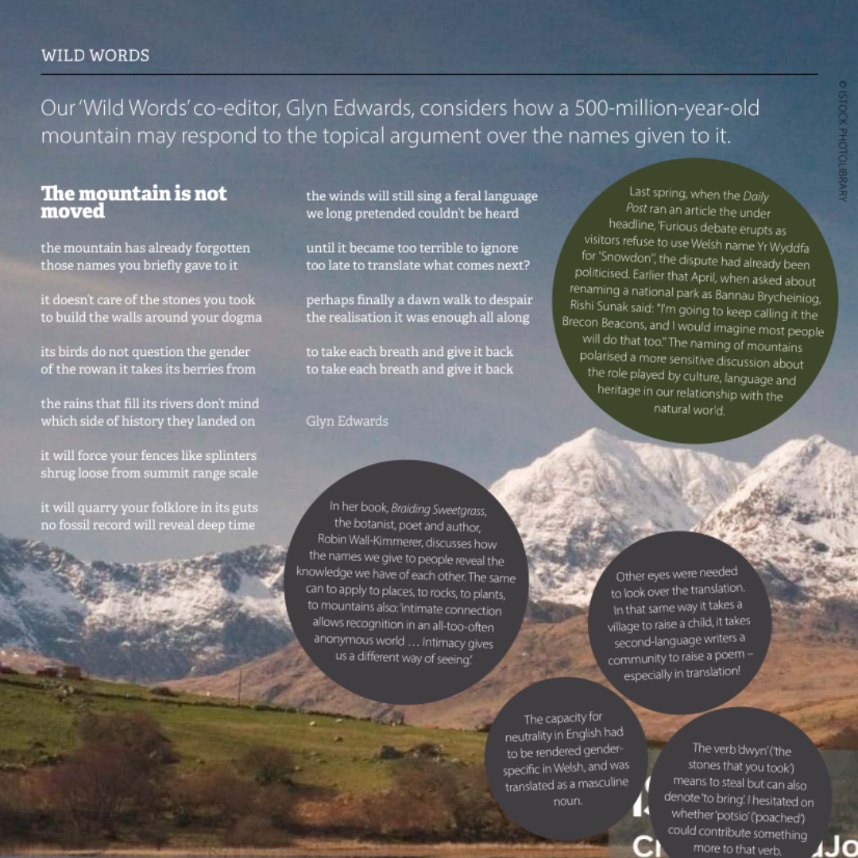
Written in response to The mountain is not moved by Glyn Edwards
Snowdon’s silent call – Tarquin Shipley
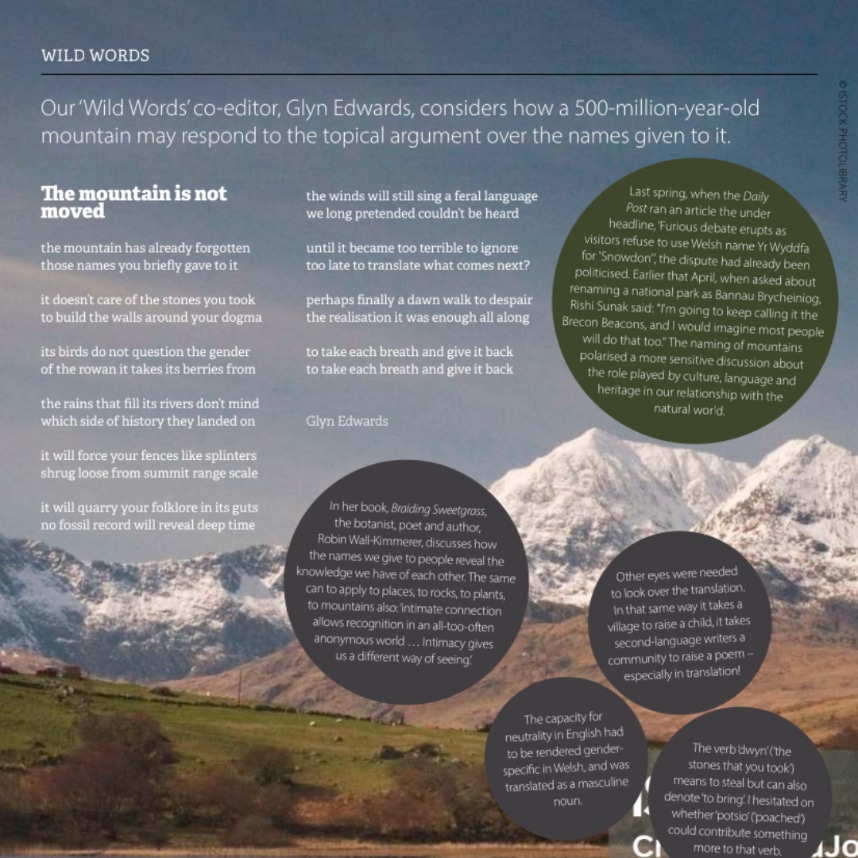
Written in response to ‘The mountain is not moved’ by Glyn Edwards
LLYF24: Rhestr Fer | WBOTY24: Shortlist

After several months reading 2023’s literary output, two independent judging panels have selected their shortlists for the 2024 Wales Book of the Year Award.
To find out more about the shortlisted books and authors, visit the Wales Book of the Year page.
The Wales Book of the Year awards ceremony will take place on Thursday, July 4 at Galeri Caernarfon. Tickets available here.
Parti Priodas gan Gruffudd Owen
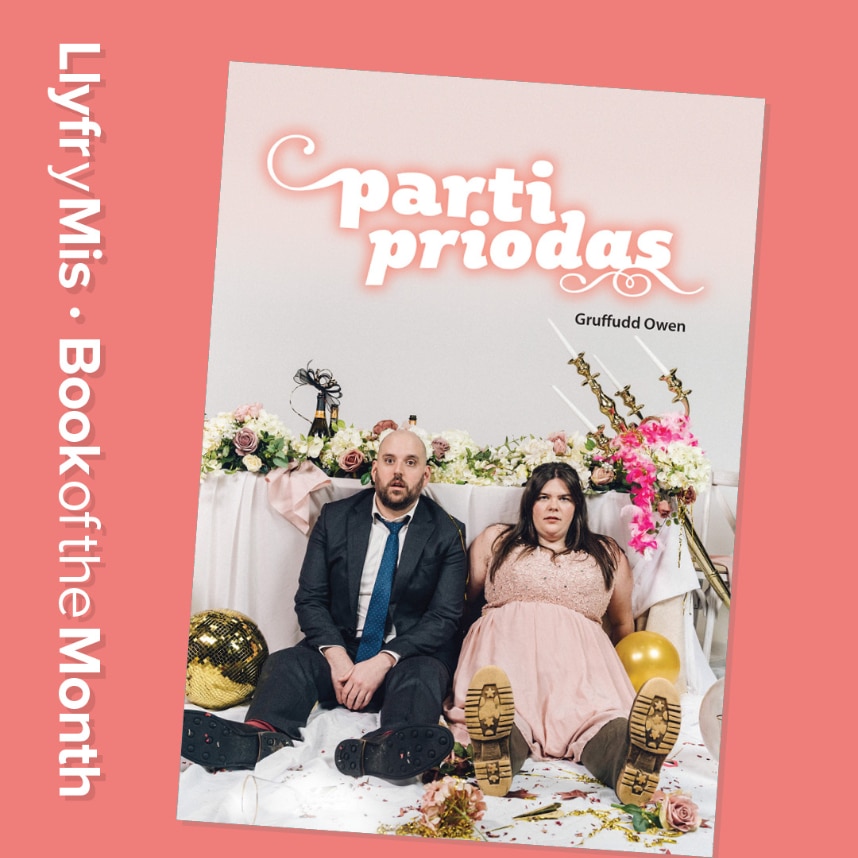
Bobi a Sami gan Wil Sam (Gwasg Carreg Gwalch) Nes i ddisgyn mewn cariad efo’r ddrama yma pan oeddwn i yn yr ysgol. Drama drist efo llawer o ddigrifiwch ynddi, ac mae hynny’n rhywbeth dwi wedi ceisio ei gyflawni efo Parti Priodas. Sut i drefnu Priodas Pum Mil gan Trystan Ellis-Morris, Emma Walford ac Alaw […]
Y Sioe Ffasiwn
Woman’s Wales? Edited by Emma Schofield
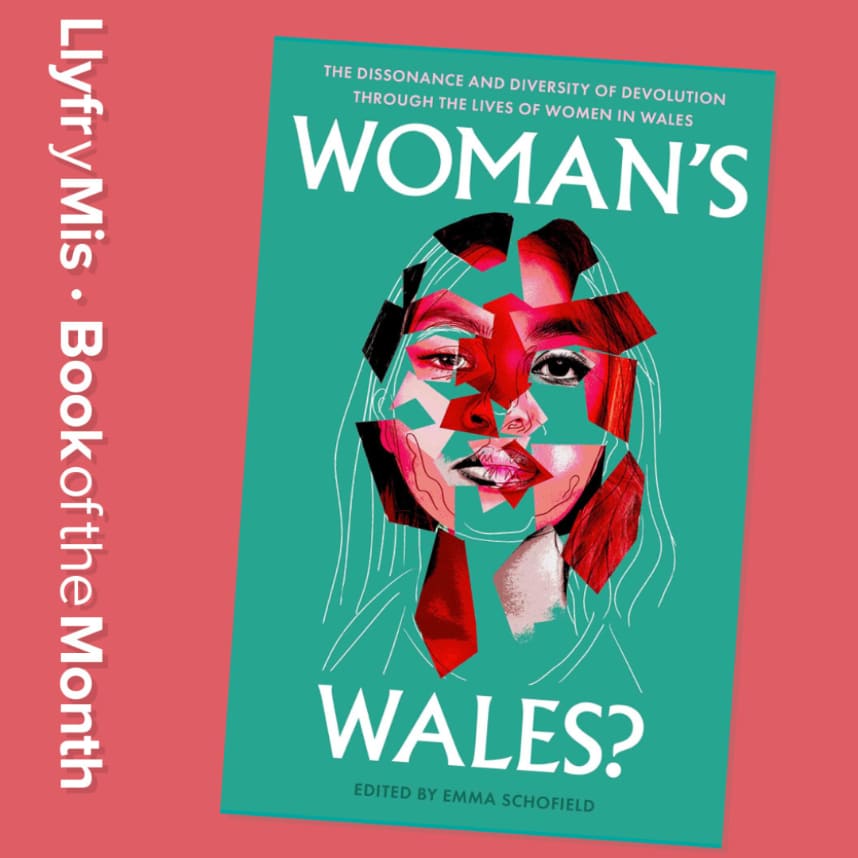
Woman’s Wales? The Dissonance and Diversity of Devolution through the Lives of Women in Wales, edited by Emma Schofield is our Book of The Month.
This collection brings together leading voices from female writers, artists, commentators, and academics to reflect on how devolution has affected them and altered our political and social landscapes.
Contributors include: Emma Schofield, Mari Ellis Dunning, Jasmine Donahaye, Norena Shopland, Rae Howells, Cerith Mathias, Michelle Deininger, Grace Quantock, Krystal S. Lowe, Sophie Buchaillard, Nansi Eccott, Jessica Laimann, Yvonne Murphy and Manon Steffan Ros.
Woman’s Wales? will be launched on 31 May 2024 at 7:00pm at Storyville Books, Pontypridd, with Emma Schofield, Grace Quantock and Cerith Mathias.
Tickets available HERE
Here is an exclusive extract from the book.
Pennod 40 – Dyneiddiaeth Gymreig
Welsh Humanism
This episode presents a subject which will be central to the next episodes as well – sixteenth-century humanism. Because Glyndŵr’s rebellion failed, Wales did not have its own universities at the time, and so the privileged Welshmen with enough resources to attain a university education had to travel beyond the borders of their native country. We explain the terms ‘humanism’ and the ‘Renaissance’ (and note that nobody used the Welsh equivalents of them in the period we’re discussing!).
Although many humanists across Europe concentrated on ‘the rebirth’ of the wealth of classical languages (Latin and Greek), humanism gave rise to another linguistic tendency – one which is of the greatest importance from the point of view of the history of Welsh, namely a desire to perfect the Old Language and ensure that it is a medium fit for discussing and transmitting learning of every kind.
QueerAF Partnership: Saltburn, Queers Without Money and the power of cinema for queer self-actualisation
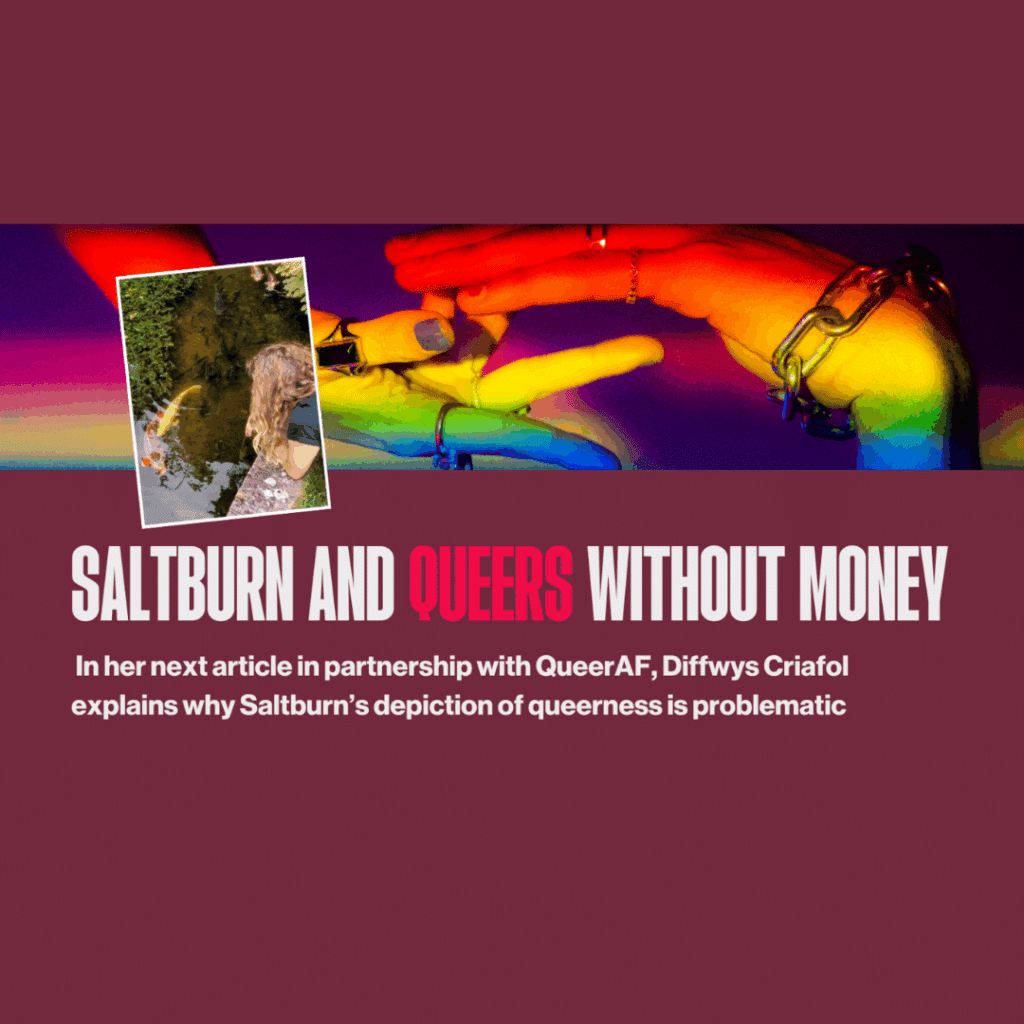
by Diffwys Criafol
In My Own Time: Overcoming Fear in a New Country

by Constanza Martinez Beundia
QueerAF Partnership: Indie games are leading the way on queer stories, where are the big studios?
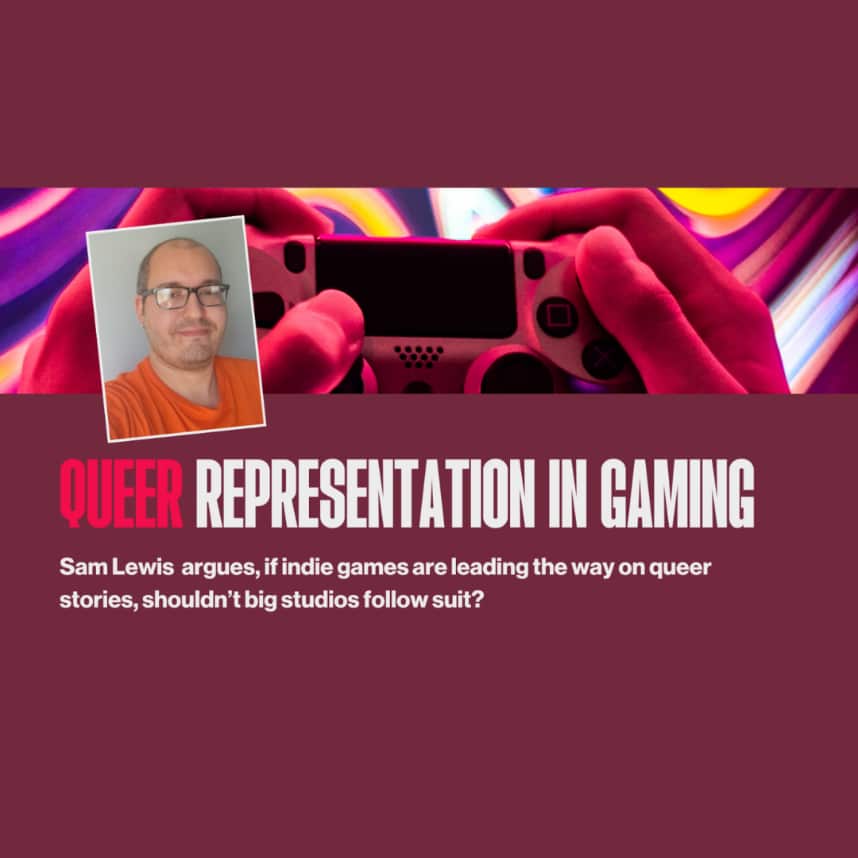
by Sam Lewis
Georgia Ruth – Duw Neu Magic
YR AIL SENGL ODDI AR ALBWM NEWYDD GEORGIA RUTH: ‘DUW NEU MAGIC’
Yn dilyn ‘Driving Dreams’, mae Bubblewrap Collective yn falch o gyhoeddi bydd ‘Duw Neu Magic’, yr ail sengl oddi ar albwm newydd Georgia Ruth, ‘Cool Head’, allan ddydd Gwener 19eg o Ebrill.
Pennod 39 – Y Gymraeg a Byd Newydd Print
The Welsh Language and the New World of Print
This episode focuses on that all-important technological development, the printing press. Given that discussing the history of Welsh literature is this podcast’s aim, we should see the arrival of this medium as an incredibly transformative milestone as far as creating and disseminating literature is concerned.
The first Welsh book was printed in 1546, and we explain the title-which-is-not-a-tile normally used in referring to it, Yn y Llyfr Hwn (‘In This Book’). Sir John Price was responsible for producing this landmark Welsh volume, but we note that he was a character who helped destroy some of Wales’ literary resources in addition to being responsible for pushing the Welsh language across the threshold of the world of print.
Pen-blwydd Hapus? gan Ffion Emlyn
Cynrychioli Cymru: Carfan 2024 -25 | Representing Wales: 2024-25 Cohort
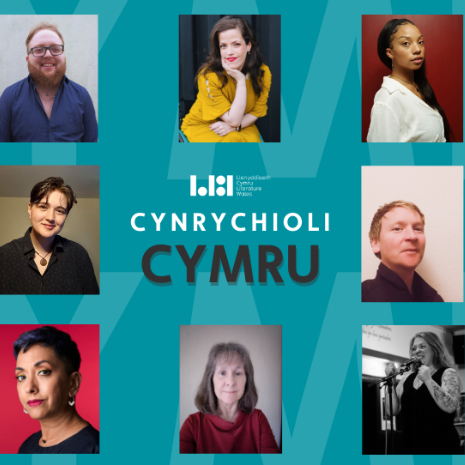
It’s that time of year again! 14 writers are about to embark on our year-long professional development programme, Representing Wales. The writers were selected by an independent assessment panel following an open call-out during the autumn of 2023 which attracted over 100 applications.
Fox Bites | Book Trailer

When Taban wishes for the world to end something out there . . . hears him.
Soon the young boy is being stalked by a fox whose salivating jaws drag him into strange dreams. Dreams where he is a revolutionary with ancient psychic powers fighting against a tyrannical regime.
He awakes with glowing scars that only he can see and the lingering embers of telekinetic abilities. Honing this flicker of power over years he plots revenge on the bullies who’ve abused him. In exchange he will become the conduit for the world’s end. But what if he changes his mind? Surely we can all come back from the edge? Can we?
Set in Zimbabwe during the early 2000s, amidst a backdrop of political turmoil, Fox Bites is a dark coming-of-age horror fantasy about pain, loneliness, and stepping back from the abyss.
Fox Bites, Lloyd Markham’s anticipated second novel is out with Parthian Books this April! Pre-order your copy here.
Hon – T H Parry Williams
During lockdown we have asked our followers from the area to send in their favourite welsh poetry to share with the community.
Here Hon by T H Parry Williams shared by Rachel Davies.
Pennod 38 – Alis Wen
Alis Wen
In this episode we discuss a remarkably interesting female poet –Alis ferch Gruffudd or ‘Alis Wen’, who composed poetry in the sixteenth century. Men were the professional poets in the period, but Alis learned the poetic art and composed a number of verses using one of the old strict metres, the englyn unodl union. It’s very likely that her father, Gruffudd ab Ieuan ap Llywelyn Fychan, was her bardic teacher, and we see that her unique relationship with her father is given attention in some of her poems. Here is a rare female poetic voice from the period which manifests a Welsh woman’s honest feelings about love, marriage and society’s expectations. Although Welsh society in the period was oppressively patriarchal, we see Alis protesting and expressing a desire to follow her own heart instead of submitting to those expectations. In addition to expressing her opinion and her feelings in a forthright manner, she also does that in a wonderfully witty way.
Parthian Showcase

Join us for a showcase of exciting new Welsh writing, featuring Joshua Jones, Philippa Holloway, Joe Bedford, Georgia Carys Williams and Lloyd Markham.
authors have won or been listed for numerous new writing awards including the Dylan Thomas Prize, The Betty Trask Award and the Ondaatje Prize.
The authors will be reading, chatting and signing throughout the evening.
nawr issue 11: four years
Buy your copy here!
Our first print zine written by co-editors, Anna Bland and Martha O’Brien and music blogger, Jordan Curtis reflects on the first four years of nawr, with a reflection on each of our first ten issues. If you’re a long time follower or new to our publication, this first venture into print is a great way to learn more about us and our creative process, as well as gaining an insight into what the past four years of art and literature in Wales have looked like.
This 26 page zine includes some of our favourite contributions alongside our own reflections and has been lovingly designed by Anja Quinn and Beth McAulay.
*NOTE: There is a small alignment issue on pages 25-26. This makes no difference to the content of the publication.
HOSPES (4K, Binaural audio)
H O S P E S
Latin
Noun
1. host
2. guest, visitor
The work is an investigation of the diasporic richness of the streets and boroughs that surround the hospital, and Cardiff more generally, and placing it within its historical context. What do the voices featured in HOSPES say about identity and belonging in our Capital City today?
The Queer Emporium
Shop and social enterprise in Cardiff that houses 20 small queer businesses and also hosts events!
Cymuned Creadigol Chapter x The Amplifier Press
Trac gan John Rea.
Dysgwch fwy am The Amplifier Press yma.
Pennod 37 – Hen Chwedlau Cymraeg a Phropaganda’r Tuduriaid: Elis Gruffydd (Rhan 2)
Old Welsh Legends and Tudor Propaganda: Elis Gruffydd ( Part 2)
Having discussed the nature and significance of Elis Gruffydd’s long chronicle in the last episode, we look this time at a number of stories of special interest which were included in the work. It’s possible to look at these narratives as Welsh folktales which were note recorded anywhere else – stories which Elis Gruffydd heard recited orally when he was a child in Flintshire and/or tales which he saw in Welsh manuscripts which have since disappeared. Thanks to Elis Gruffydd we have the earliest version of two connected tales presenting the history of the otherworldly poet Taliesin, narratives full of fun which also say a great deal about the way in which the Welsh perceived the power of poetry.
We also mention a tale which depicts King Arthur as a selfish and jealous womanizer. A loyal soldier in the army of Henry VIII, Elis recorded a number of tales having to do with the ‘history’ of the Tudors as well, including one which elevates Henry VII as y mab darogan (the prophesied savior of the Welsh) above Owain Glyndŵr, a love story which explains the origins of the family, and one about the prophet bard Rhobin Ddu who foresaw the birth of Henry Tudor.
Cyflwynwyd gan: Yr Athro Jerry Hunter a’r Athro Richard Wyn Jones
Cynhyrchwyd gan: Richard Martin
Cerddoriaeth: Might Have Done gan The Molenes