
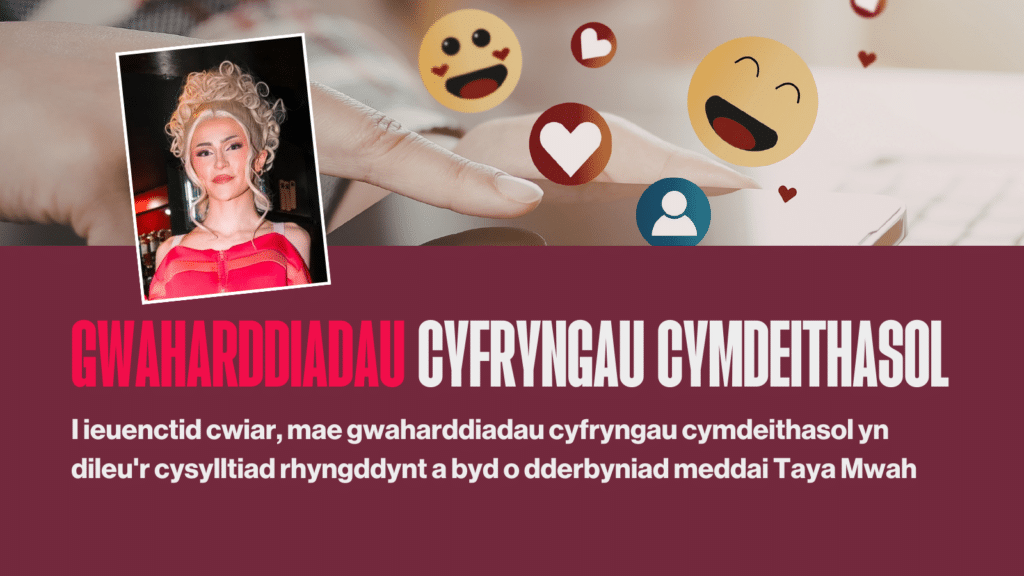
When conversations about social media bans reach the halls of Westminster, they are framed as a straightforward safeguarding issue. One that can be solved with broad language and all-encompassing solutions for 2026’s youth.
Politicians seem buoyed by bans elsewhere, including in Australia, Indian states and now Spain. That’s despite increasing warnings of the harm they can cause.
Zoom out from the cities, where these decisions are being made, and into the Welsh valleys, you can start to see a different picture. Even for today’s Queer Welsh youth, the first time we see someone like ourselves is not in our school or our village, but online.
Campaigners have been clear that restricting access to social media, though framed as a way to protect young people, for LGBTQIA+ youth risks cutting off something vital. The debate often centres on screen time and addiction, but rarely pauses to ask what, and who, might be lost in the process.
Growing up in rural Wales shapes your experience of queerness in ways that can be difficult to explain to those raised in cities. The valleys, to my 8 year old self, centred around rugby matches every weekend and a culture of groups of boys playing in the streets.
I am blessed with a supportive family, however queer ‘community’ in my teen years was hard to find. It wasn’t until I went to college in Cardiff and stayed behind for 4 hours every Thursday after classes to join the Welsh Ballroom Scene that I was able to experience a queer community in person.
Before I had this, I built one online. Bonding through Instagram and YouTube comment sections, I spoke about discovering ‘RuPaul’s Drag Race’, niche horror shows and other things that I could never have mentioned in rural Wales.
“The Children’s Commissioner for Wales has highlighted how geography and poverty intersect to shape young people’s access to support, and that disparity extends to LGBTQIA+ provision. When offline options are scarce, digital communities can be life-saving.”
Taya Mwah, Writer
The Children’s Commissioner for Wales has previously highlighted how geography and poverty intersect to shape young people’s access to support, and that disparity extends to LGBTQIA+ provision. When offline options are scarce, digital communities can be life-saving.
Forty years ago, isolation for queer youth would have been much more common. During the era of Section 28 in the late 1980s and 1990s, local authorities were prohibited from “promoting” homosexuality, creating a chilling effect in schools and libraries across the UK.
This legislation silenced discussion of LGBTQIA+ identities and left many young people without accurate information or visible role models.
For a queer teenager in a rural part of the UK at that time, connection required physical proximity, and where that proximity did not exist, neither did the support. The lack of community, including online, meant many queer young people faced isolation, with no access to support.
Today’s online spaces collapse that distance. Through TikTok, Instagram and YouTube, queer young people can follow queer creators. That visibility matters, particularly when your immediate surroundings offer little reflection of who you are becoming.
Findings show that LGBTQ+ young people who feel safe and understood in online spaces report better mental health outcomes than those who do not.
The Trevor Project’s 2023 U.S. National Survey on the mental health of LGBTQ Young People, 41 per cent of LGBTQ+ young people seriously considered attempting suicide in the past year, but those who had access to affirming spaces, including online communities, reported better outcomes.
UK research paints a parallel picture. Stonewall’s School Report has consistently found that LGBTQ+ pupils experience higher rates of bullying and lower feelings of belonging at school, conditions that can drive young people to seek connection elsewhere.
None of this suggests that social media is without harm. Research has documented rising levels of online hate speech, including anti-LGBTQIA+ rhetoric. Blanket social media bans risk ignoring the uneven way harm and benefit are distributed.
Adult content restrictions are paving the way for more censorship for the queer community.
Young people do not all use social media in the same way. José González Vargas’ story shows how powerful online sites can be for impacting queer youth’s lives, “Time zones didn’t matter, nor usually did labels such as gay, bi, cis, non-binary or trans. We all remained there because we needed it.”
If we are serious about protecting young people, we need to approach social media policy with that nuance in mind. Safeguarding matters, but so does access. For queer young people growing up far from visible community, a phone and access to community online is a lifeline.
This article is part of a QueerAF and Inclusive Journalism Cymru partnership dedicated to uplifting Welsh LGBTQIA+ emerging and marginalised journalists.
You can follow Taya on Instagram and TikTok.
Sign up to QueerAF’s weekly newsletter or become a member.