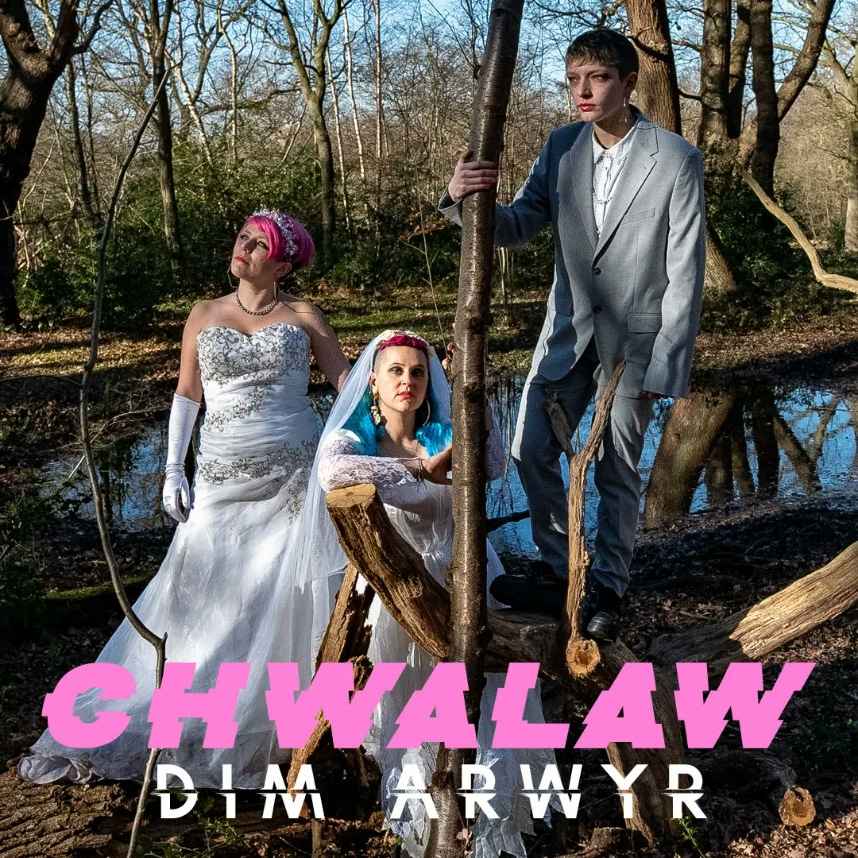
‘Dim Arwyr’ (No Heores) is a song about how the stories we have grown up with as children idolised the male hero archetype, and how we don’t want to hear those tales anymore – Izzy and Efa’s lyrics express that they want to hear about the women, witches and anti-patriarchal legends. The violin melody comes from an old Sorbian song called Budzer.
Efa Supertramp, Izzy Rabey and Cerys Hafana appear in the video in wedding dresses in a forest. The three musicians wander through the forest in a sort of queer feminist fantasy that ends with smoke and mud. Izzy was chosen to direct the video, with Gabi Norland filming and directing the photography. Izzy explained where his inspiration came from “Within the context of the video I drew inspiration from Courtney Love’s videos in his band Hole in the 90s and the work of the 70s Punk band The Slits – the joy, enjoyment and power that is unlocked by not sticking to Welsh legendary female stereotypes. Embrace the ugly on power that is within us all!”
Efa explained how the song came into being during a residency with Sorbian artists, “We discussed a lot about how so many of our traditions (Welsh and Sorbian) are patriarchal and so we wanted to create a different future for our languages and cultures – feminist and queer futures. Paul Geigerzähler put down the violin melody (from a traditional Sorbian song) and then Nick looped it and built the track from there. The words of the original folk song ‘Budzer’ were unhealthy, so that was the inspiration – from us just thinking about all the strong people who have existed in the past and how their stories have been forgotten and lost. So we sent the song to Izzy to see if she wanted to rap on it”.
Izzy added, “The Mabinogion always portray women as individuals who need to be saved, “pure”, victims of trauma and putting off their potential husbands and potential husbands. For me, the portrayal here as women as victims plays into how music and the Welsh arts portray women. For this song, I wanted to talk about the power to be found in celebrating your complexity, of being a witch rather than a princess and how deeply legends can play into how we see femme people today. ”