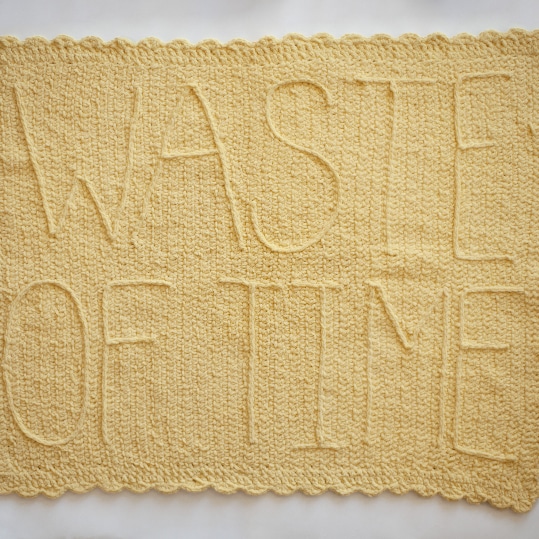
This work is a part of a series of crocheted baby blankets. During Covid, I returned to crochet as it was easy to do at home, particularly with distractions such as a small child in the same space. It was also a cathartic activity and helped to calm my anxieties, something which I heard echoed across the world as people started to take up crafts again. While I was making it though, I was wrestling with my own insecurities about the value of such activity. 16 | Page Although some deny its continued existence, there remains a hierarchy in the art world; craft processes rank lower than disciplines such as video or sculpture. This extends even further; amongst crafts, textiles are one of the least well regarded. This highlights issues of gender and value. Textiles are “feminine” , often made by women, and part of the domestic sphere. There are many artists using craft materials and making art that is deserving of (and occasionally receiving) recognition, but this does not mean that this debate is no longer relevant. Prejudice against the “feminine” continues to be pervasive and used to dismiss these works of art. The debasement of craft is yet another method of the continued marginalisation of women in the art world. I started to stitch words and phrases on to the blankets, to get them out of my head, and by exposing them, show how ridiculous they were. And then I almost put them away in a drawer, to be forgotten as no more than a “coping mechanism” for the pandemic. When I saw this year’s DAC art prize theme I thought of this work. For many people with disabilities (myself and members of my family included) the pandemic was a bit of relief – we no longer had to make ourselves fit into “normal society” and there seemed to be more empathy for others. Yes, I would like to be “a part” of the world again, but not the world that was before. I want a world where everyone is included and valued. I have made art about the marginalisation of craft before, but am looking to it with renewed vigour. Past work has shown advanced craft skill and been highly refined; this series is intentionally less sophisticated. I didn’t want the work to be too beautiful, too well made, easy to justify in its existence because of the skill and time involved. It is easy to place a value on something with monetary terms – this is why governments and economists love things like GDP. 17 | Page But there are so many more ways in which worth can be measured and when we only value numbers, things/people/parts of life are overlooked. So, this sardonic little baby blanket in cheap acrylic yarn is about so much more, about what we value in our society and the balance that I feel needs readdressing.