
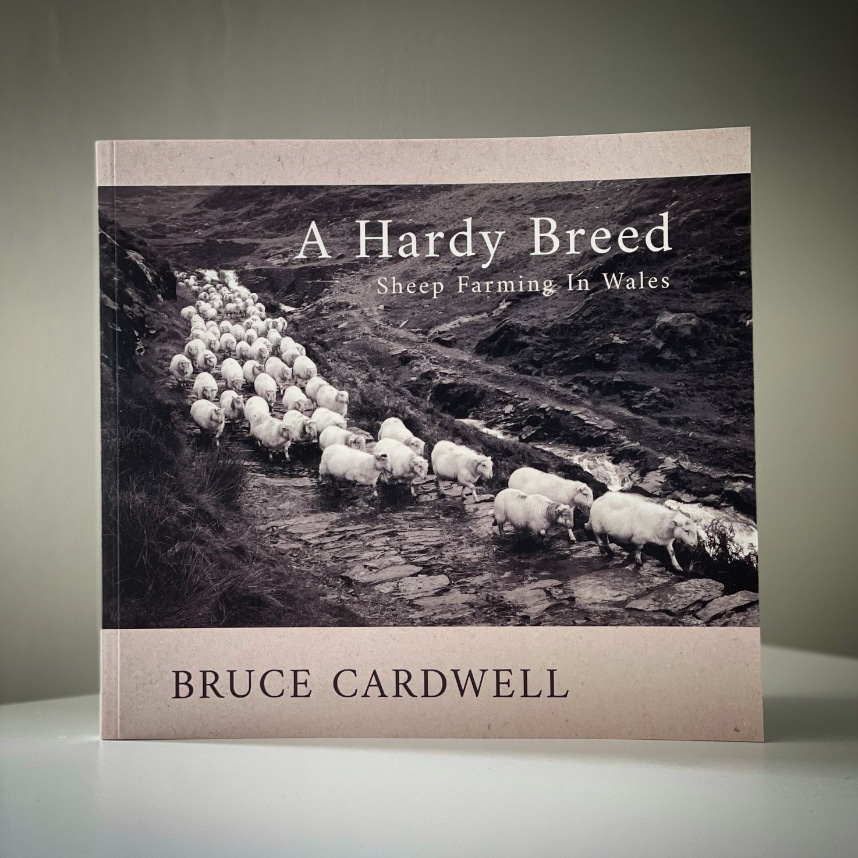
Tell us about the book.
Some time ago, when Brexit first cooked up, it became apparent to me that it could potentially, make a huge seismic shift in land use in Wales, if the previous EU funding for farmers and shepherds was going to become a Welsh Assembly responsibility, because of the need for action regarding global warming and climate change, alongside various economic pressures.
It struck me that shepherding and sheep farming has been a core element of Welsh identity for millennia. I looked around me and thought well, the majority of first-language Welsh speakers are living in the countryside rather in the urban areas, and they are all involved, to a greater or lesser degree, in that industry. There was the potential, apparent to me, for a societal and social change.
The lesson of history is that things that we thought were eternal, you look around and they’ve gone. I’ve always had a bit of a bee in my bonnet about how communities and populations are represented, and historically, it’s the celebrities, the power brokers, and the people at the very top of the pyramid who are used to identify or recall what was going on at the historical period.
I wanted to create a celebration of something that have been such an important element of life in Wales for centuries. I wanted to capture real people, so that in 50- or 100-years’ time, people will be able to look at some of my photographs and feel that that they met that person.
I didn’t want it to be a kind of cold reportage. I wanted it to be quite personal. A person-to-person thing, that when they looked at these photographs, they would see another human being and they would be reading into their face and their body language and their clothing, and getting a feel for, what their life was all about.
How did the photographs come about?
I wanted to do it and it was like standing, looking at a huge desert. How would I get across? My first thought was that I needed a guide. I have known Erwyd Howells since way back in the 80s. He has written a book about the shepherds of mid Wales called Good Men and True. I talked to Erwyd and he gave me some good advice. He introduced me initially to Dai Coed, David Evans. Dai does contract shearing, and so he was my first contact. I went around with him to farms while he was shearing, and that was what tipped it off.
Being able to speak a little bit of Cymraeg made a difference, I could do enough to make a connection with people. I didn’t spend a lot of time because people didn’t have a lot of time. There are limits to the imposition you can make on somebody in their working life. So basically, it would have been a day, on each occasion.
A lot of places I went to would be the end of the road, literally. The road would stop there. Some of the people I met were quite private people. I was lucky to be able to be given access. People were friendly and open, there was no pretence or attempt to create an image in the way that somebody might on social media. People were just prepared to be themselves.
I tried to get a bit of a geographical spread. Some Anglesey, some north Wales, a very big spread across mid Wales and the west, not so much in in the south Wales area. But I didn’t set out to be an academic exercise or to be comprehensive.
Did you enjoy the process?
I felt it was a privilege. I came to Ceredigion in 1981, to go to Uni. I was 31, and I’ve been living here for, 40 years. I thought I knew Wales. But what this project did, was made me realise, that I knew an element of it and that there was large aspect of it that I hadn’t really been exposed.
I felt privileged to be allowed to do it. I just tried to be honest and be straightforward. I live here, I will continue to live here. I’m conscious of not betraying anybody’s confidence or trust. I always say I don’t take people photographs; people give me their photograph. It’s an absolute collaboration.
What do you think you’ve learned about Wales through the photographs and through the process?
It wasn’t so much an intellectual learning as a kind of increased empathy. I realised how much this life meant to the people who live it, because of their forebearers, because of their long familial connection with the land.
I’m very grateful to Wales for giving me a safe place to live after leaving Northern Ireland. I think it’s just increased my affection for this country.
And it’s a plea in a way to the Welsh Assembly, to take a holistic approach to the changes they are going to make. I think I say in the book that as well as thinking globally, they need to think Wales as well, and to manage the change with an understanding of how much the rural economy, and social structure is dependent on this.
A Hardy Breed: Sheep Farming in Wales by Bruce Cardwell is available now from your local bookshop.