
Not Lost (Reading)
Be Sy’n Digwydd // What’s On

Upcoming events by Graffeg!
Pitw a Cawr: Y Grib (Darlleniad)
April’s Garden (Reading)
Caru Darllen: Sgyrsiau 2023
Pennod 31 – Yr Eisteddfodau Cynharaf ac Addysg y Beirdd
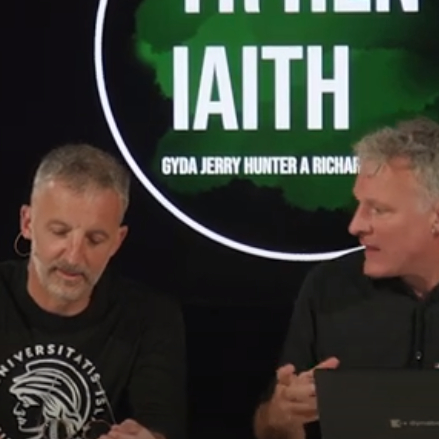
The Earliest Eisteddfodau and Bardic Education
Here’s a special live episode recorded in the Literature tent of the Llŷn and Eifionydd National Eisteddfod, and what better subject to discuss on the Maes in Boduan than the earliest eisteddfodau?
Is it possible to see the ‘Special Feast’ held by Lord Rhys in Cardigan in 1176 as the first eisteddfod ever recorded? And while discussing an eisteddfod held about the middle of the 15th century we consider the connection between these early eisteddfodau and the way in which bardic learning was transmitted, safeguarded and controlled. What is the significance of the ‘bardic grammars’ which have survived in manuscripts, and what is the history of that strange term, dwned, used sometimes to describe these kinds of texts?
With an eye to the next series of the podcast – which will examine Welsh literature from the 16th century – we discuss the eisteddfodau held in Caerwys during that century and that interesting document, ‘The Statue of Gruffudd ap Cynan’, which is connected with the Caerwys Eisteddfodau. We note that it’s possible to see all of this regulation in two very different ways – as an indication of strength, confirming the status and importance of the old Welsh bardic order, or as a sign of weakness, as sources of patronage were diminishing during the age of the Tudors. And what would 21st-century Welsh poets think about the way in which the ‘Statute’ prohibits bards from frequenting taverns?!
Gift a Book This Christmas
Thinking of your Christmas shopping? Let us help with some brilliant book suggestions.
Pennod 30: ‘Gwledd hyd y gogledd o gig’: Y Cywyddau Brud
‘A Feast of Flesh all the way to the North’: Prophetic Poetry from the War(s) of the Roses
Not counting a special episode recorded in the National Eisteddfod which will be broadcast next, this is the last episode in the first series of Yr Hen Iaith.
We finish discussing literature from the Middle Ages and many themes from the series come together as we consider prophetic poems in the cywyddau form connected with the ‘Wars of the Roses’. The word for prophecy used in this context is brud, and we explain that Welsh in previous times had a special way of seeing connections between the history, the present and the future of the Welsh nation. They were wars between the families of York and Lancaster for the crown of England, and the struggles ended in 1485 with the victory that made Harri Tudur yn Henry VII. But, while they supported real contestants in the struggle, these prophetic poets often depicted the wards in a deeply archaic way as a conflict between the Welsh and their old enemies, the English.
We look at some poetry by Dafydd Llwyd of Mathafarn, considering a number of cywyddau which show how he used ancient traditions to treat contemporary politics, lingering for a while over a wondrously bloody poem, his dialogue with the Raven.
Here’s an opportunity to examine some big concepts, including ‘pre-modern proto-nationalism’ and the continuation of tradition.
Cyflwynwyd gan: Yr Athro Jerry Hunter a’r Athro Richard Wyn Jones
Cynhyrchwyd gan: Richard Martin
Cerddoriaeth: Might Have Done gan The Molenes
Llyfr – anrheg i’w hagor dro ar ôl tro: Llyfrau i Oedolion
Llyfrau’r Flwyddyn
Llyfr – anrheg i’w hagor dro ar ôl tro: Llyfrau i bobl sy’n dysgu Cymraeg
Review of the Year 2023
‘Tis the season for reflection… Time to look back on a busy, exciting and incredibly rewarding year for Inclusive Journalism Cymru
Enaid y Ddinas gan Awduron Amrywiol, lluniau Richard Outram
Hynt y Ceidwadwyr Cymreig ers datganoli – a beth nesaf?
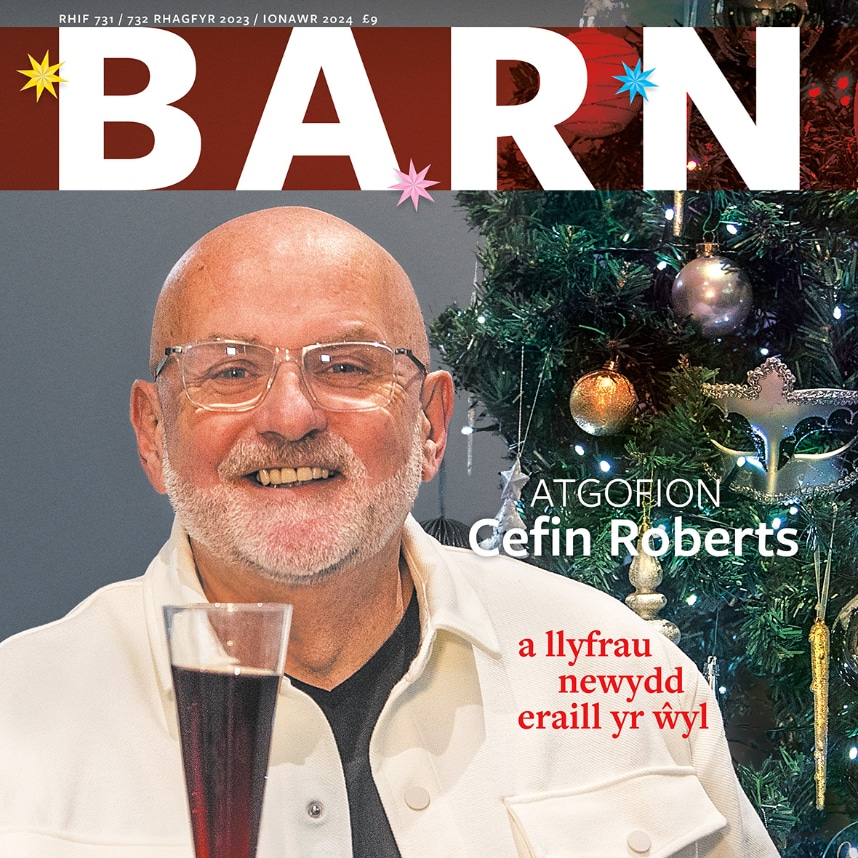
CWIS i’n darllenwyr – GWOBR: Gwaith celf ysbrydoledig o Orielodl
Wild Cherry: Selected Poems by Nigel Jenkins

Wild Cherry: Selected Poems by Nigel Jenkins, edited with an introduction by Patrick McGuinness is our December Book of the Month.
Pennod 29 – Gwin, Arch a Diwedd Oes: Guto’r Glyn
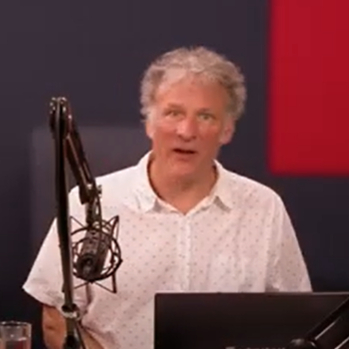
In this episode we discuss one of the most important Welsh poets of the 15th century. Guto’r Glyn had a long life, being born a few years after the end of Owain Glyndŵr’s rebellion and dying some years after Henry Tudor won the crown of England. Guto was a professional soldier at times as well, and aspects of his work show how familiar he was with warfare of the age.
Specializing in praise poetry cast in the cywydd metre, more than one hundred of his poems have survived, and this large body of work is an important source for understanding the bardic tradition in the later Middle Ages. Although he didn’t compose about love and nature as did many of the other cywydd poets, his praise poetry varies greatly and can be extremely inventive. One of his poems describes a battle between the bards and the wine of their patron, as they attempt to empty his cellars. We also discuss his powerful elegy to another poet, Llywelyn ab y Moel, and a cywydd which Guto sung towards the end of his life, a remarkable poem which portrays the bard as an old man troubling the monks caring for him.
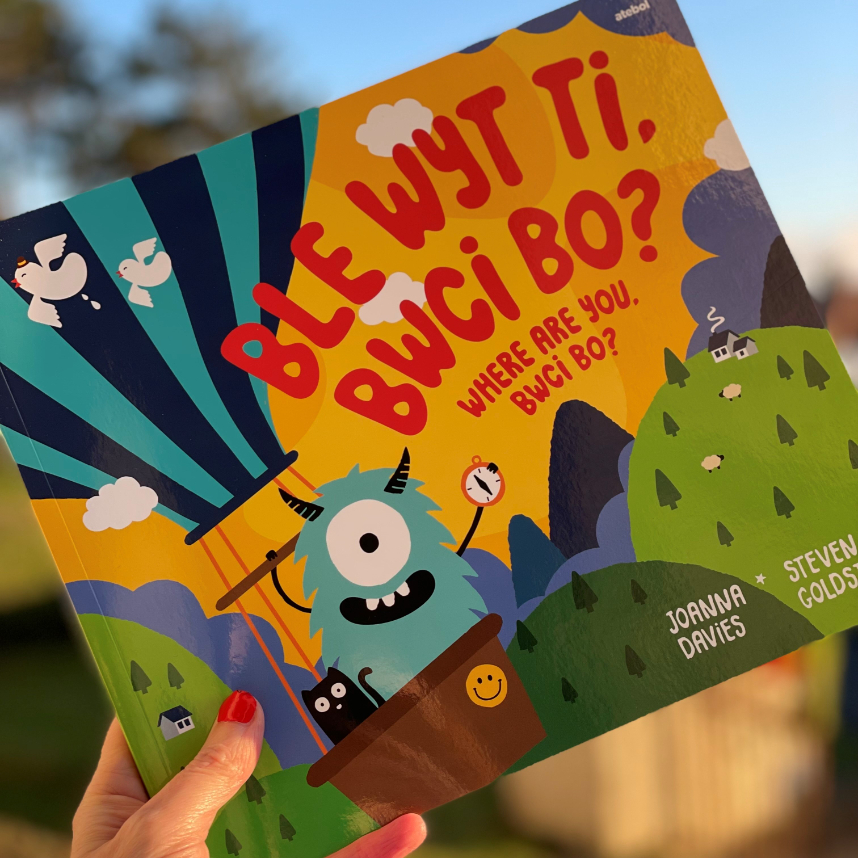
Ble Wyt ti Bwci Bo? gan Joanna Davies a Steven Goldstone
Caru Darllen: Mari George ac Iwan Rhys
Beth yw pwrpas lansiad llyfr?
Dewch i adnabod Nia Morais, Bardd Plant Cymru 2023-2025.

An interview with Nia Morais, Bardd Plant Cymru 2023-2025.
Bardd Plant Cymru (Welsh-language Children’s Laureate) is a national ambassadorial role which aims to inspire and empower children and young people across Wales through literature.
Tymor yr Afalau – Nia Morais

Get to know Alex Wharton, Children’s Laureate Wales 2023-2025.

An interview with Alex Wharton, Children’s Laureate Wales 2023-2025.
The Children’s Laureate Wales is a national ambassadorial role which aims to inspire and empower children and young people across Wales through literature.
I Don’t Want to Write a Poem – Alex Wharton
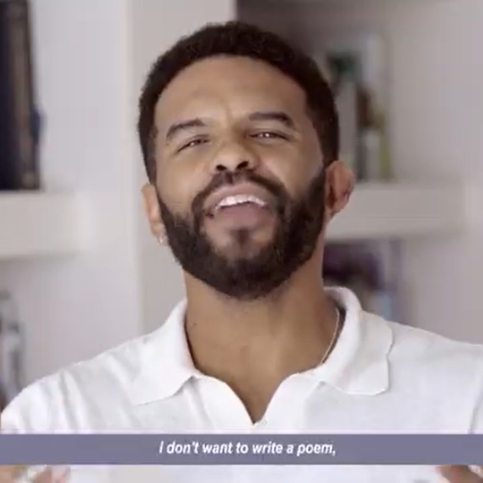
Watch Children’s Laureate Wales 2023-2025, Alex Wharton, read his poem ‘I don’t want to write a poem’.
The Children’s Laureate Wales is a national ambassadorial role which aims to inspire and empower children and young people across Wales through literature.
Mared Llywelyn a Buddug Roberts
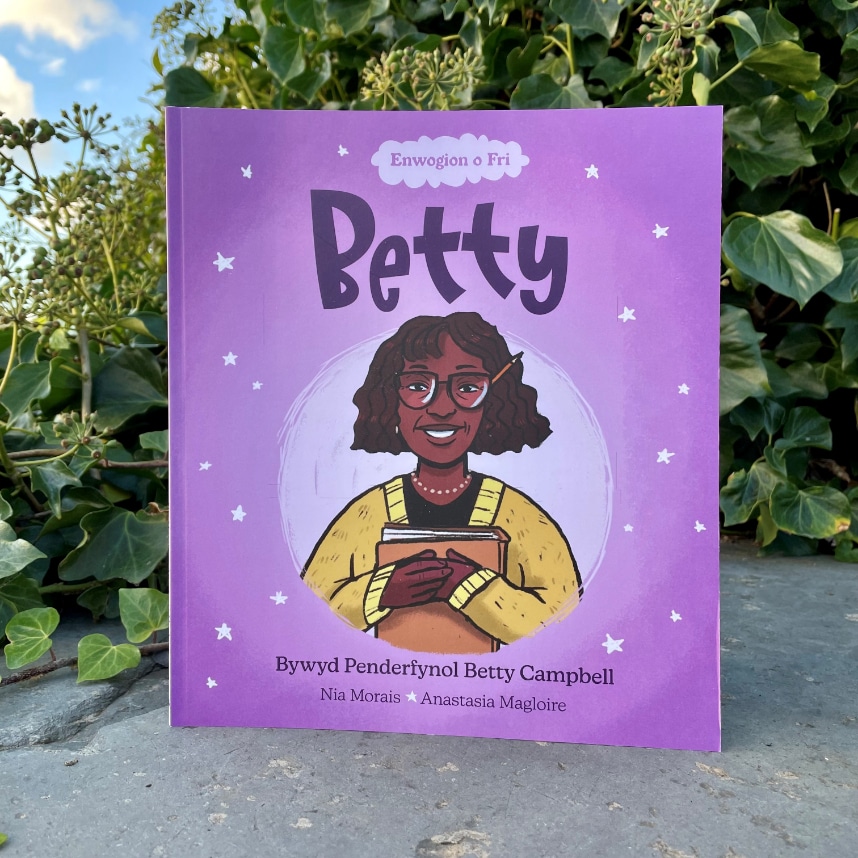
Betty: Bywyd Penderfynol Betty Campbell gan Nia Morais ac Anastasia Magloire
You Only Live Thrice: Reacting to a Later Life Autism Diagnosis
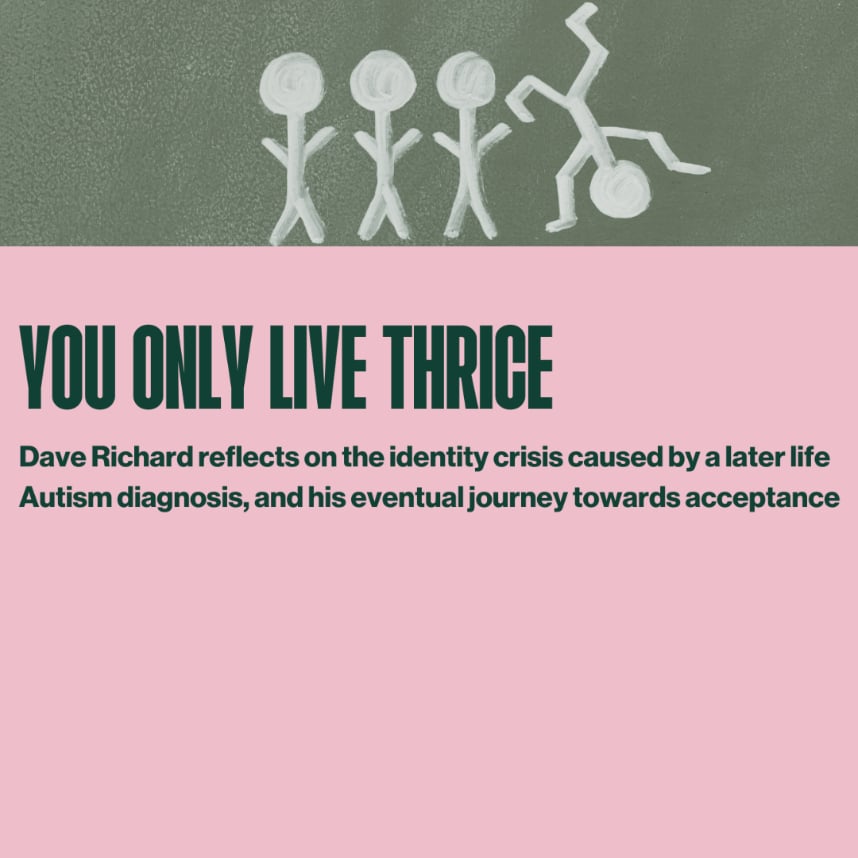
Dave Richard reflects on the identity crisis caused by a later life Autism diagnosis, and his eventual journey towards acceptance.
Members’ Blogs: How-to Guide
As an organisation dedicated to supporting journalists and writers, we are incredibly proud of our members’ blogs. This feature gives writers a paid platform from which to share their stories, and has been one of our key successes, with subjects ranging from social mobility to trans rights to disability in the workplace. Our contributors have had their work shared on social media and on our newsletters, with one blog post even being syndicated in a Portuguese publication! We also see them as a valuable resource for employers, funders and change-makers, acting as pointers towards creating a safer and fairer environment for journalists.
It is absolutely vital that people from marginalised backgrounds are heard – we urge you to add your voice to the conversation.
To make the process as clear and simple as possible, we’ve listed some guidelines below.
Pencerdd

This content is in Welsh only.
Pennod 28 – ‘Bawddyn!’: Ymrysonau’r Cywyddwyr
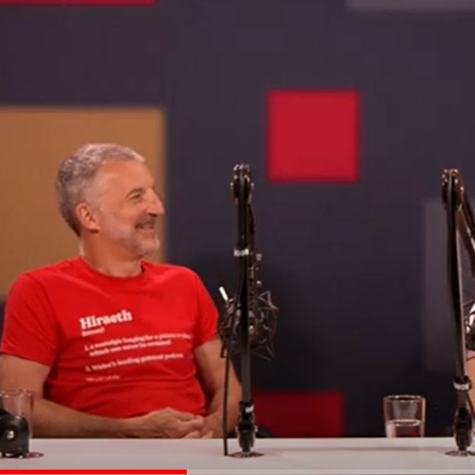
‘Shit-man!’: Bardic Debates of the Cywyddwyr
In order to deepen our understanding of the work of ‘The Poets of the Uchelwyr’ or the Cywyddwyr, we look at their ymrysonau or bardic debates in this episode.
While considering poems exchanged by bards, we examine possible connections between this poetry and lost social contexts. It’s likely that bards engaged in an ymryson for various reasons during the period in question – in order to compete for patronage, in order to establish or confirm one’s reputation, in order to discuss aspects of their art (and argue about them!), and for the sake of fun or entertainment – but we must use our imagination (and some anthropological theory!) in order to understand the relationship between this amazing poems and the context(s) which gave birth to them. We also discuss another very interesting question: why does a poet call his opponent such nasty names, and do so in a discussion about refined topics such as the source of poetic inspiration and the proper function of a poet?
Eluned Gramich a Sara Borda Green
Hen Lwynog o Lyn!
Twm Morys
Curiadau: Blodeugerdd LHDTC+

Curiadau is a pioneering and exciting LHDTQ+ anthology, the first of its type in the Welsh language. Skilful editor Gareth Evans-Jones brings together striking and diverse LHDTQ+ talents. This special collection comprises works by poets, writers and playwrights.
Buy your copy here
Mymryn Rhyddid – Gruffudd Owen

The second volume of poetry by Gruffudd Owen, Chaired Bard of Cardiff National Eisteddfod 2018.
Get your copy here
Y Gragen – Casia Wiliam

A charming rhyming story about a city child visiting the beach in a seaside village for the first time. The child returns home with a sea shell as a souvenir of the place where children laugh while eating ice cream, seaweed squeals and nature sings. There is a QR code in the back of the book that leads to online activities.
Get your copy here
Gwawrio – Tegwen Bruce Deans
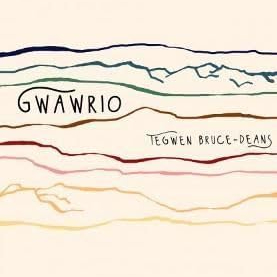
A volume of poetry by a new poet, Tegwen Bruce-Deans. The poems discuss nature, people, relationships and much more. Tegwen is part of the current, daring poetry scene and reveals a mature voice in her first volume.
Get your copy here!
Anwyddoldeb – Elinor Wyn Reynolds

A first volume of poetry by Elinor Wyn Reynolds, being a look at one’s journey through life and lingering with some of life’s experiences and choices along the way.
Gweld Llun o Glywed Llinell – Rhys Dafis

A collection of poems by Rhys Dafis, in which the poet gathers his thoughts about various themes, e.g. nature, family and society.
Get your copy here!
Pigion Y Talwrn

The latest volume presenting the best poems heard on the popular series ‘Talwrn y Beirdd’ on Radio Cymru, selected by Ceri Wyn Jones.
Get your copy here!
Podlediadau llyfrau
Sgwrs Fflur Dafydd
Llŷr Titus a Peredur Glyn
Caru Darllen: Guto Dafydd a Malachy Edwards
Pennod 27 – Llais Cymraes: Gwerful Mechain
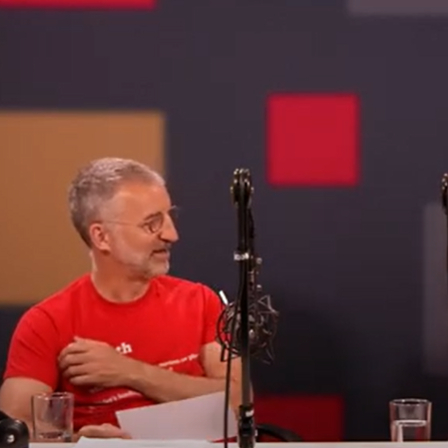
It’s about time that we concentrate on literature by a Welsh woman. Since we have started discussing the period of the cywydd, we leap forward from the time of Dafydd ap Gwilym a century and more in order to consider the work of Gwerful Mechain, a female poet who lived and composed during the second half of the 15th century.
It is also a means of considering how Welsh literary ‘canon’s – like that influential volume, The Oxford Book of Welsh Verse – have ignored the work of female poets like Gwerful Mechain. We also note that Gwerful is remembered chiefly by some as an ‘indecent poet’ – an unfortunate stereotyping – because her work treats a range of themes, including religion. We look in some detail at her masterful cywydd describing the passion of Jesus. We have an opportunity to consider some very different poetry as well, work which discusses sex from a woman’s point of view and satirizes the love poetry of the male bards.
Crow Face, Doll Face by Carly Holmes
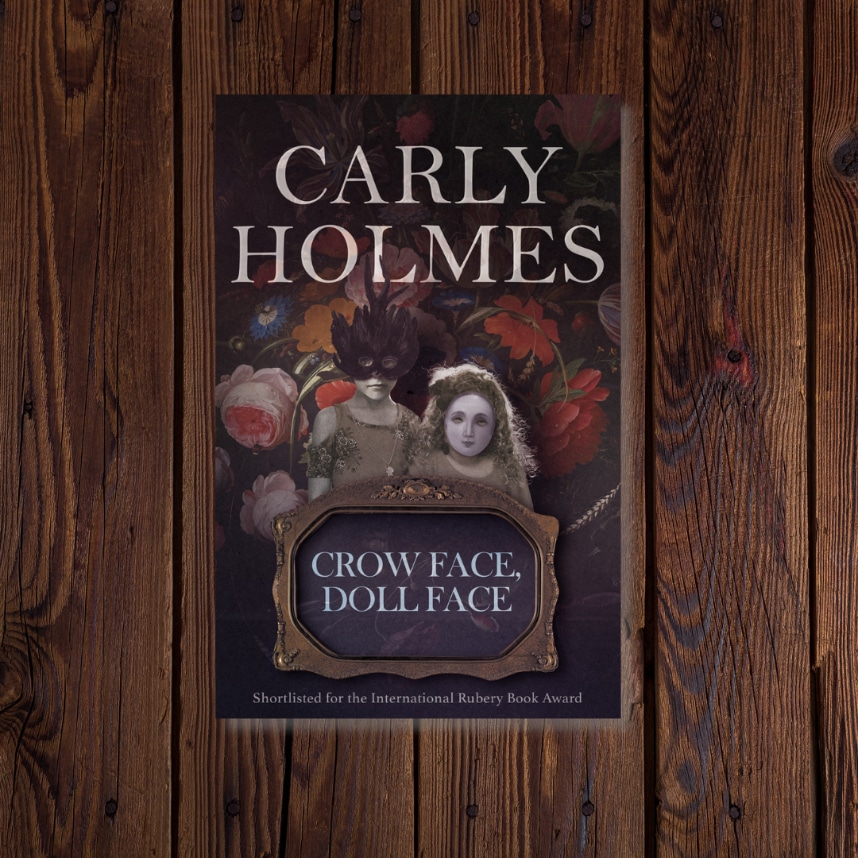
Crow Face, Doll Face by Carly Holmes is our November Book of the Month.
Alun Parrington
Yr Etholiad Cyffredinol Prydeinig yng Nghymru
Gypsy Writers: Commissioned Writers and Mentor Announcement

The Romani Cultural and Arts Company’s trailblazing new creative writing project ‘Gypsy Writers’ kicked off in September 2023. Supported by the Books Council of Wales, this ground-breaking literary initiative will develop new writing by Gypsy, Roma and Traveller writers currently living in Wales.
An extension to the Romani Cultural and Arts Company’s highly successful ‘Gypsy Maker’ programme, we are delighted to announce the four currently unpublished Gypsy, Roma or Traveller writers who have been selected for this competitive mentoring programme are:
Allison Hulmes
Daniel Turner
Ivan Horvath
Fabian Hovath
‘Gypsy Writers’ will nourish the rich talent in Gypsy, Roma and Traveller communities and bring exciting, marginalised voices to the attention of the publishing industry. We are pleased to announce our project mentor is Dr Jo Clement, an award-winning writer, publisher and lecturer in Creative Writing at the University of Northumbria.
Dr Joanne Clement said “I am delighted to join the Romani Cultural and Arts Company as its ‘Gypsy Writers’ mentor, delivering a nourishing and ambitious plan to develop new writing by these talented emerging Gypsy, Roma and Traveller authors. This is an exciting time for new perspectives in literature and I look forward to working closely with each writer to develop their unique voice and find out their take on the world. Discovering the subjects that compel a writer to write, honing literary expression and steering writers toward publication is one of the greatest joys of my life”.
Anest Williams from the Books Council of Wales said: “We are pleased to be able to fund the ‘Gypsy Writers’ literature project, one of many important projects funded by the New Audiences grant this year. We hope that this funding will assist in providing a platform for the voices of Gypsy, Roma and Traveller writers, and we look forward to reading the outcome of this much-needed work.”