The Earliest Eisteddfodau and Bardic Education
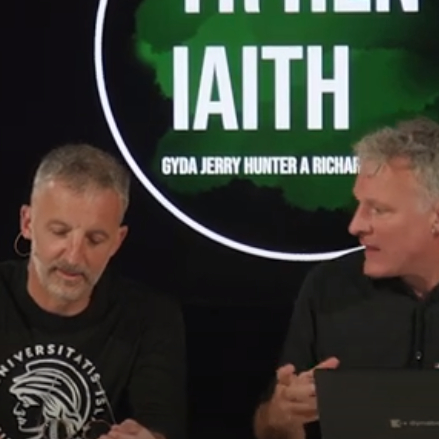
Here’s a special live episode recorded in the Literature tent of the Llŷn and Eifionydd National Eisteddfod, and what better subject to discuss on the Maes in Boduan than the earliest eisteddfodau?
Is it possible to see the ‘Special Feast’ held by Lord Rhys in Cardigan in 1176 as the first eisteddfod ever recorded? And while discussing an eisteddfod held about the middle of the 15th century we consider the connection between these early eisteddfodau and the way in which bardic learning was transmitted, safeguarded and controlled. What is the significance of the ‘bardic grammars’ which have survived in manuscripts, and what is the history of that strange term, dwned, used sometimes to describe these kinds of texts?
With an eye to the next series of the podcast – which will examine Welsh literature from the 16th century – we discuss the eisteddfodau held in Caerwys during that century and that interesting document, ‘The Statue of Gruffudd ap Cynan’, which is connected with the Caerwys Eisteddfodau. We note that it’s possible to see all of this regulation in two very different ways – as an indication of strength, confirming the status and importance of the old Welsh bardic order, or as a sign of weakness, as sources of patronage were diminishing during the age of the Tudors. And what would 21st-century Welsh poets think about the way in which the ‘Statute’ prohibits bards from frequenting taverns?!